Renewals and resilience investment will become more important into the future as existing assets age, growth potentially slows, and climate pressures intensify. This will require a shift in how and where we invest.Wellington City Council submission
Content
Content

4.2. Making maintenance and renewals the first investment priority
Kia noho ko te tautiakinga me ngā whakahounga te whakaarotau haumitanga tuatahi
Context
Nothing is more certain than maintenance and renewals. Most of the infrastructure we will need over the next 30 years already exists. As kaitiaki, or guardians, our job is to look after these buildings and networks and hand them over to future generations as assets, not burdens. This means doing the basics well and setting aside money for renewals rather than prioritising new builds or enhancements. If we don’t, service levels will decline and communities will be on the hook for costly reactive repairs.
Agencies need to develop mature asset management systems and plans, not just ‘build and forget’. Asset management is the coordinated activity of an organisation to realise the value from its assets. It means having the right things, in the right place, at the right time, managed by the right people. The IMS, through a Cabinet circular, sets expectations for how agencies should manage their existing assets.81, 82
Parts of the system work well, but there is significant room for improvement. There are numerous high-profile examples of why New Zealand was ranked fourth to last in the OECD for asset management in 2023,83 including visible symptoms of neglect like sewage leaks in hospitals, leaky classrooms and mouldy army barracks.
Protecting infrastructure against risks is also an asset management challenge. Planning for, mitigating, and responding to natural hazard events and other threats forms part of the long-term cost of providing and operating infrastructure. When a damaging event occurs, renewals that might otherwise have been required many years later often need to be brought forward, increasing financial and operational pressure. Major events like earthquakes and cyclones happen infrequently, but they can be extremely costly. Infrastructure providers must also account for cybersecurity risks and other malicious threats that can disrupt the safe and reliable operation of their assets. New Zealand’s National Risk Register, which identifies 28 nationally significant natural hazards and threats, provides an important framework for understanding and preparing for these risks.
Strategic direction
Government agencies understand what assets they own and how those assets are performing
The first rule of asset management is to understand your assets. Central government infrastructure providers should maintain asset registers with information such as the location, condition and risk exposure of their service-critical assets. Agencies should use this information to understand how the condition of their assets will change over time.
Agencies should manage their infrastructure to deliver expected levels of service. Since 2010, this requirement has been set in a Cabinet Office circular on investment management and monitored by the Treasury. Recent amendments to the Cabinet Office circular also require agencies to maintain asset registers and asset management plans and to consider whether their assets are resilient to significant risks.
Asset management standards are followed consistently across government
New Zealand must get better at asset management. At present, asset management maturity varies between sectors, and tends to be lowest for central government social infrastructure providers like health, justice and education (Figure 28). Contributing factors include a lack of understanding and awareness of the importance of asset management, inadequate information on assets, a lack of transparency and accountability, and insufficient enforcement of best practices.
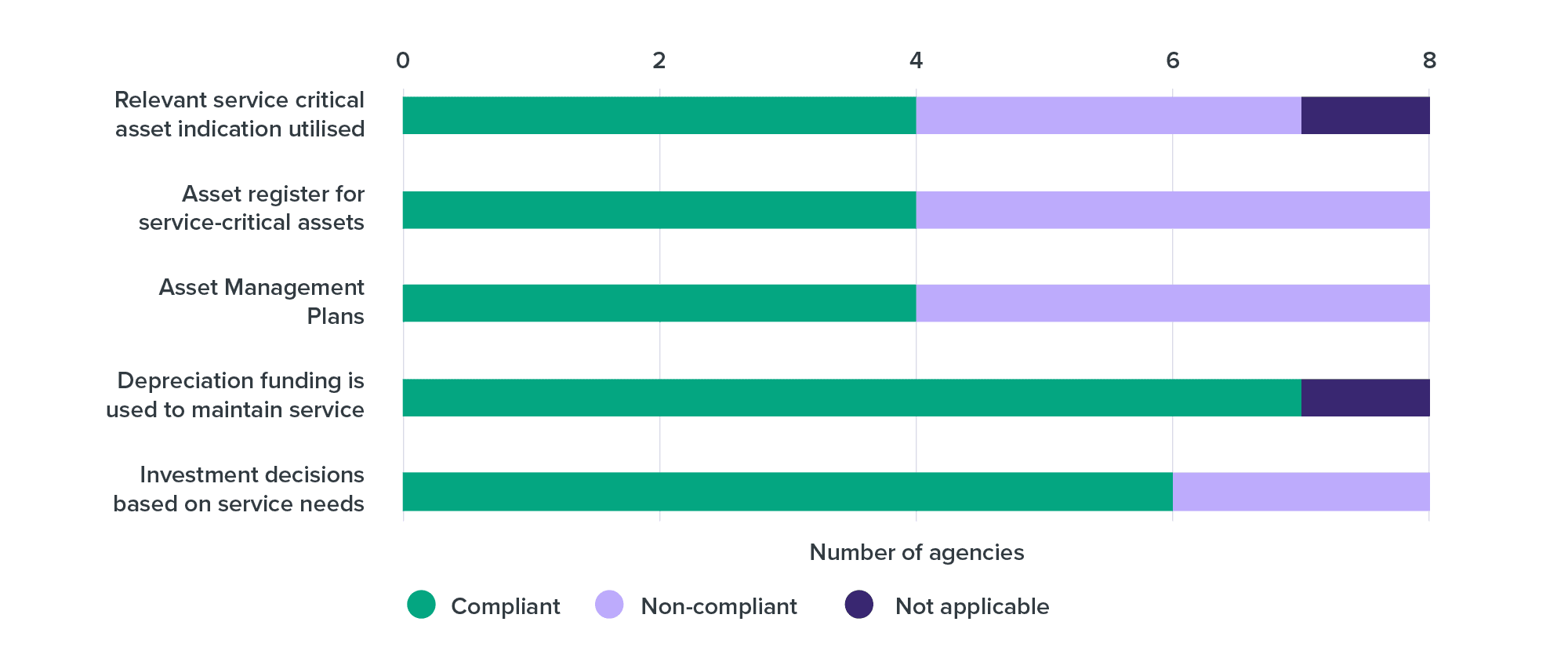
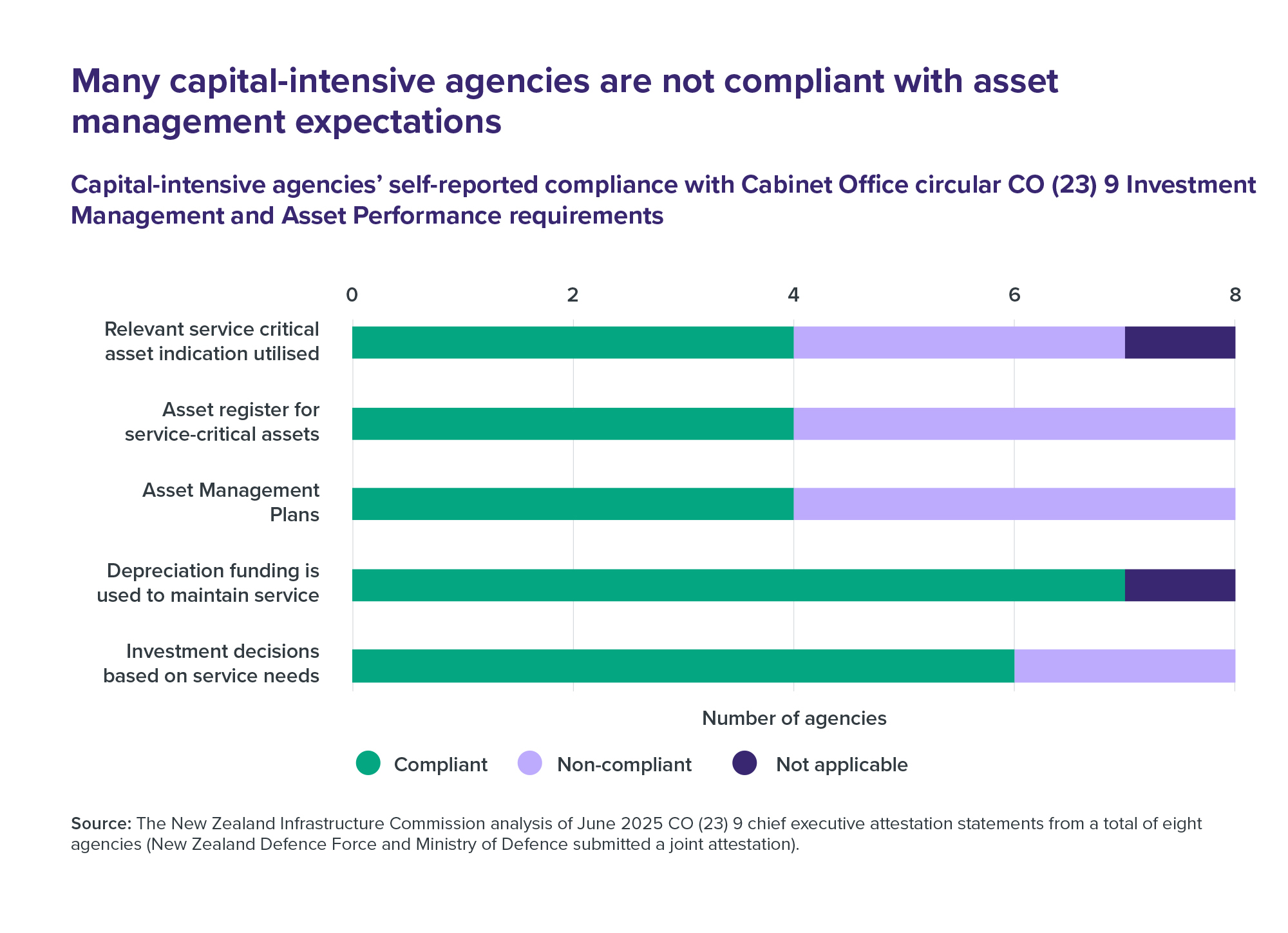
Capital-intensive agencies should consistently meet basic asset management requirements. A small number of entities manage a large share of public assets, so improving their performance would significantly lift system-wide outcomes. As of June 2025, four of eight capital-intensive agencies reported that their asset registers did not meet required standards, and four lacked asset management plans to guide strategic, tactical, and operational decisions (Figure 28). Because this information is self-reported, actual performance may be weaker. Several agencies also noted that compliance varied across asset classes, meaning headline results may mask gaps within portfolios.
Most capital-intensive agencies are not compliant with asset management expectations
Figure 28: Capital-intensive agencies’ self-reported compliance with Cabinet Office circular CO (23) 9 Investment Management and Asset Performance requirements
Source: The New Zealand Infrastructure Commission analysis of June 2025 CO (23) 9 chief executive attestation statements from a total of eight agencies (New Zealand Defence Force and Ministry of Defence submitted a joint attestation).
Agencies should use funding intended for maintenance and renewals on maintenance and renewals. Most agencies receive ongoing output expense appropriations that should generally cover the ongoing costs to provide needed assets, including maintenance, renewal and risk management, but excluding costs to meet rising standards.86 The Cabinet Office circular on investment management sets an expectation that agencies use depreciation funding to ensure that the levels and methods of service enabled by the agency’s assets reflect its strategic intentions.87
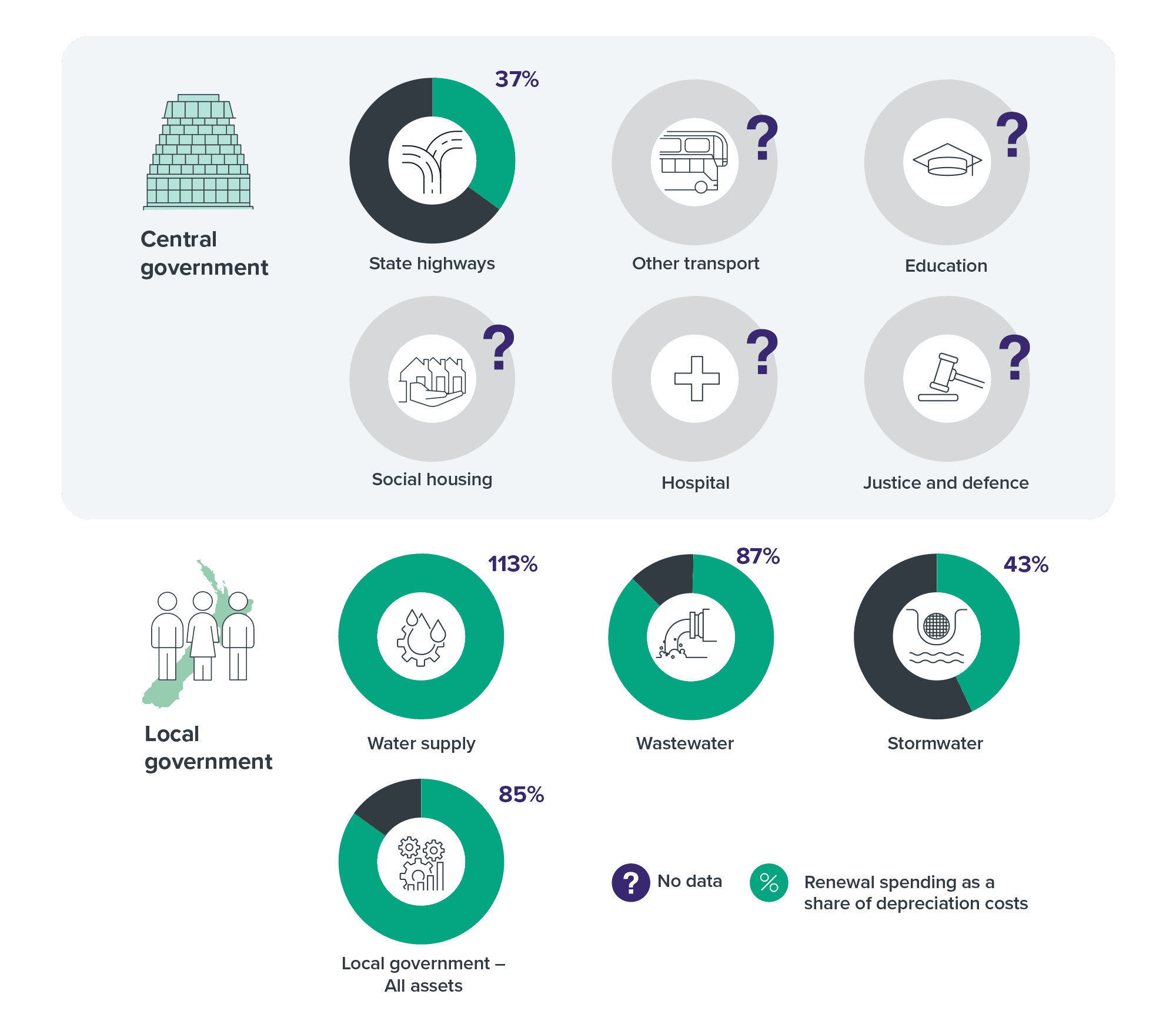
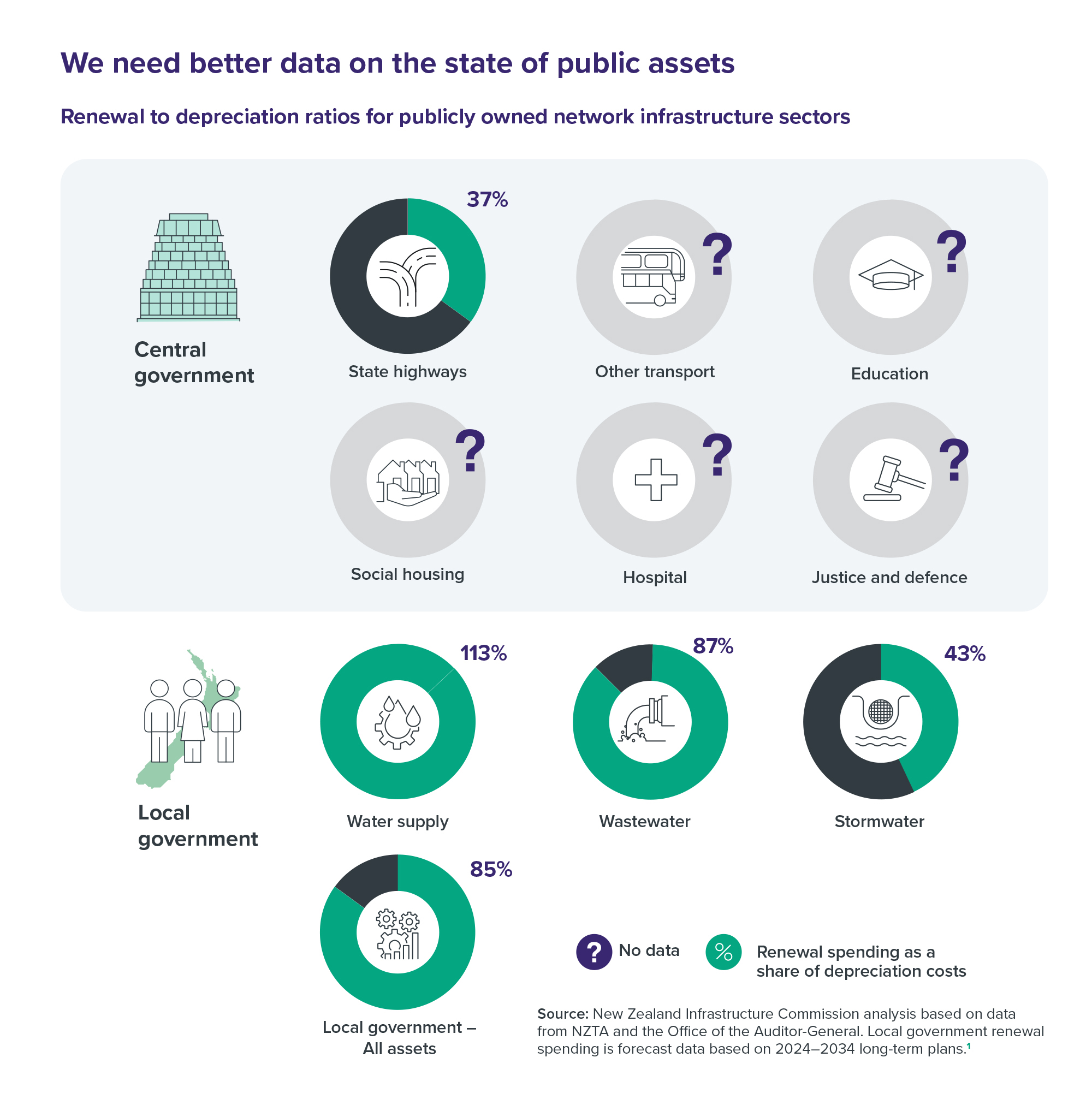
Central and local government need to lift spending on renewals to compensate for periods of underinvestment. Renewal expenditure on state highways, for example, averaged only 37% of reported depreciation between 2012 and 2022 (Figure 29),88 although operating spending for pavement maintenance would push up this ratio. The lack of publicly comparable data for other major asset portfolios, including schools, hospitals, courts and prisons, makes it difficult to have confidence that central government infrastructure is being appropriately managed. For instance, past under-investment in the defence estate has left assets in poor condition and prone to failure, driving reactive maintenance costs sharply upward. As of March 2024, the maintenance and renewal backlog – work that should have happened but didn’t – was estimated at $480 million.89
We need better data on the state of public assets
Figure 29: Renewal to depreciation ratios for publicly owned network infrastructure sectors
Source: New Zealand Infrastructure Commission analysis based on data
from NZTA and the Office of the Auditor-General. Local government renewal spending is forecast data based on 2024–2034 long-term plans.90
Agencies should transparently report what they spend on maintenance and renewals. This rarely occurs at present, making it difficult to know whether funding intended to maintain and renew infrastructure is being diverted to other pressures. Clear reporting is necessary to assess whether maintenance and renewals are adequately funded and whether depreciation funding is being used as intended. Introducing disclosure requirements for central government would align it with the obligations already placed on local government and commercial entities regulated by the Commerce Commission.
Other indicators are also needed to understand how well assets are being looked after. In addition to financial metrics, agencies should transparently report on how they are performing against their long-term asset management and investment plans. This should include a focus on service performance and risk measures like asset condition, use, insurance coverage, and exposure to natural hazard events and climate change. Greater transparency can lead to improved asset management practices and decision-making. It also allows the public to understand how agencies are managing assets on their behalf.

Priority for the decade ahead
Prioritise adequate maintenance and renewals
Forward Guidance: We expect spending on infrastructure to go from just over $20 billion per year to more than $40 billion per year by the 2050s. Around 60% of this should go towards renewing and replacing what we already have. For sectors and areas with little demand growth, the figure could be even higher.
What’s the problem?
New Zealand is one of the worst high-income countries in the world at looking after its existing infrastructure. Central government agencies have consistently underfunded maintenance and renewals, resulting in visible problems like leaky hospitals and police stations, mouldy barracks, and potholes. This undermines public confidence and prevents our infrastructure networks from being able to deliver the levels of service they were built to provide. Routine maintenance is more cost-effective than costly catch-up programmes, so setting up good practices will free up resources for other needs.
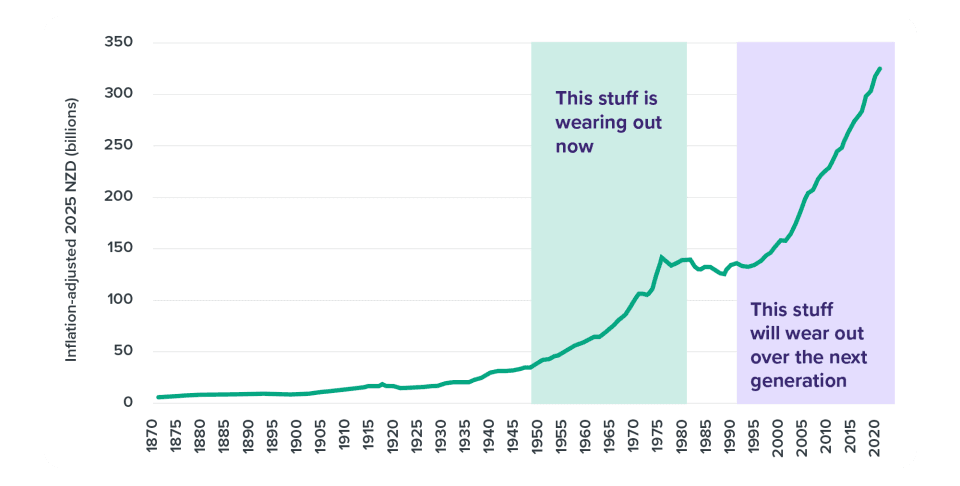
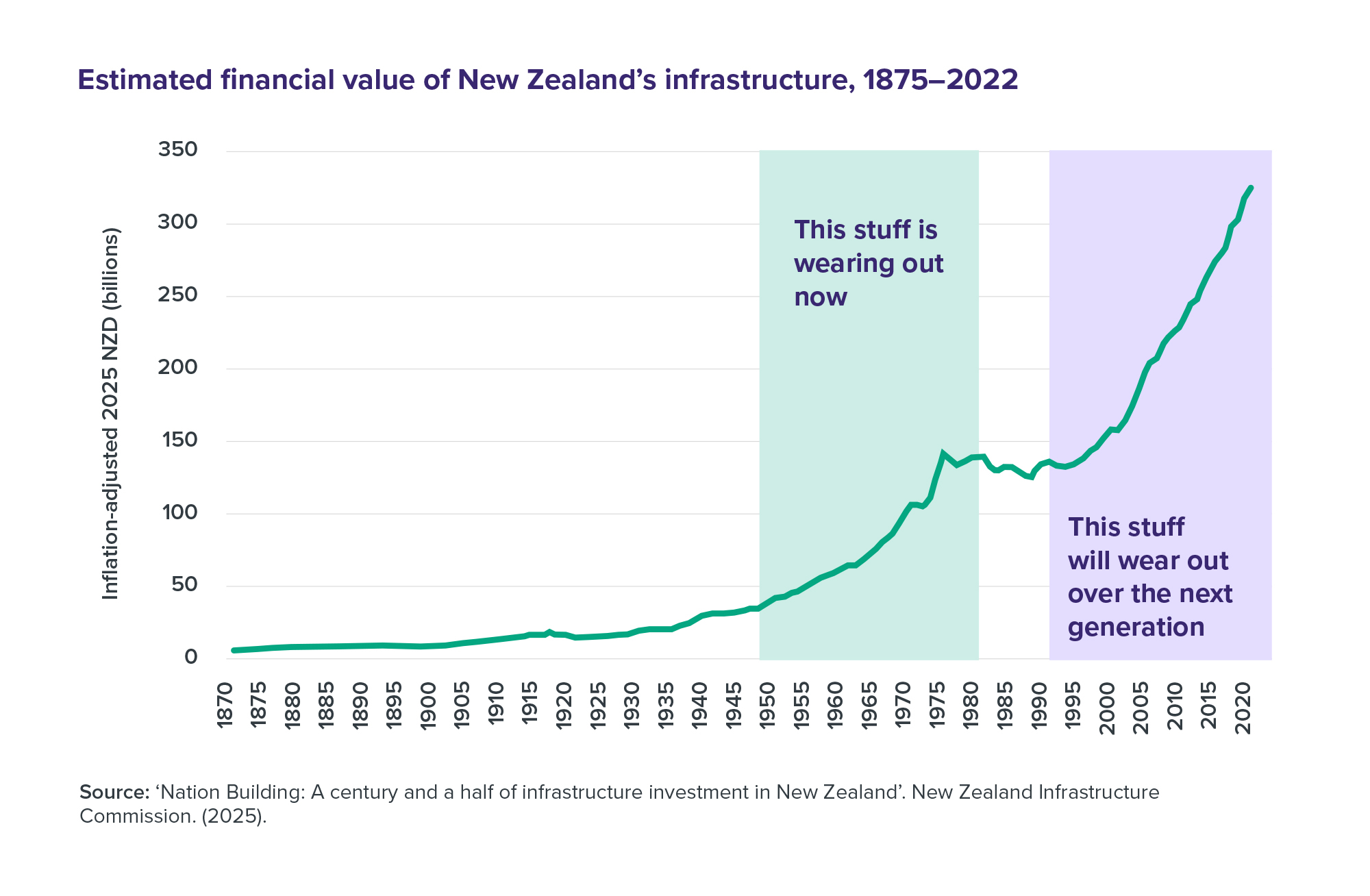
Previous generations have left us with more than $330 billion worth of infrastructure, most of which was built after 1950.91With the first big wave of post-war buildings and networks now reaching the end of their useable lives, we need to invest wisely to ensure we’re handing over rebuilt and well-maintained assets, not burdens, to future generations of New Zealanders.
This is complicated by poor asset management. Knowing what you own – and what condition it’s in – is a basic requirement of good stewardship, yet many agencies have inaccurate or incomplete data. Inconsistent reporting means we can’t tell how much is being spent on maintenance and renewals, as opposed to new infrastructure or service upgrades. This makes it hard to keep track of whether agencies are spending depreciation funds on their existing assets. Depreciation is a financial measure that functions as a proxy for how fast an asset is wearing out.
Figure 30: Estimated financial value of New Zealand’s infrastructure, 1875–2022
Source: ‘Nation Building: A century and a half of infrastructure investment in New Zealand’. New Zealand Infrastructure Commission. (2025).
Key actions
- Ring-fence depreciation funding. Central government agencies that receive depreciation funding should spend it on their existing assets. This is an expectation in an existing Cabinet Office circular, but it is not always met. There are many ways to achieve ring-fencing, but the key outcome is that funding is applied to existing assets as intended. To provide discipline there needs to be transparent reporting and monitoring in place to ensure agencies aren’t diverting depreciation funding to other needs.
- Direct agencies to identify unfunded renewal projects. Not all agencies receive tagged depreciation funding. Even for those that do, it might not be enough to cover the cost of a renewal project due to changing asset valuations and cost inflation. Agencies need to have mature asset management and investment plans that identify when their buildings and networks will require rebuilding or remediation. These projects should be the ‘first call’ for any new funding.
Agencies better understand risk and invest in cost-effective resilience
Infrastructure needs to become more resilient to the wide range of risks New Zealand faces. Between 1960 and 2022, New Zealand incurred average annual reported losses equal to almost 0.6% of GDP from natural hazard events, making us the second most vulnerable country in the OECD.92 The 2023 North Island weather events alone are estimated to have caused between $9 billion and $14.5 billion of damage.93 Infrastructure providers must also consider the wider range of hazards and threats in New Zealand’s National Risk Register, including earthquakes, flooding, cyber-attacks, supply chain risks and foreign interference.94 In 2023/24 the National Cyber Security Centre received 22 cyber-incident reports each month targeting nationally significant organisations like critical infrastructure operators.95
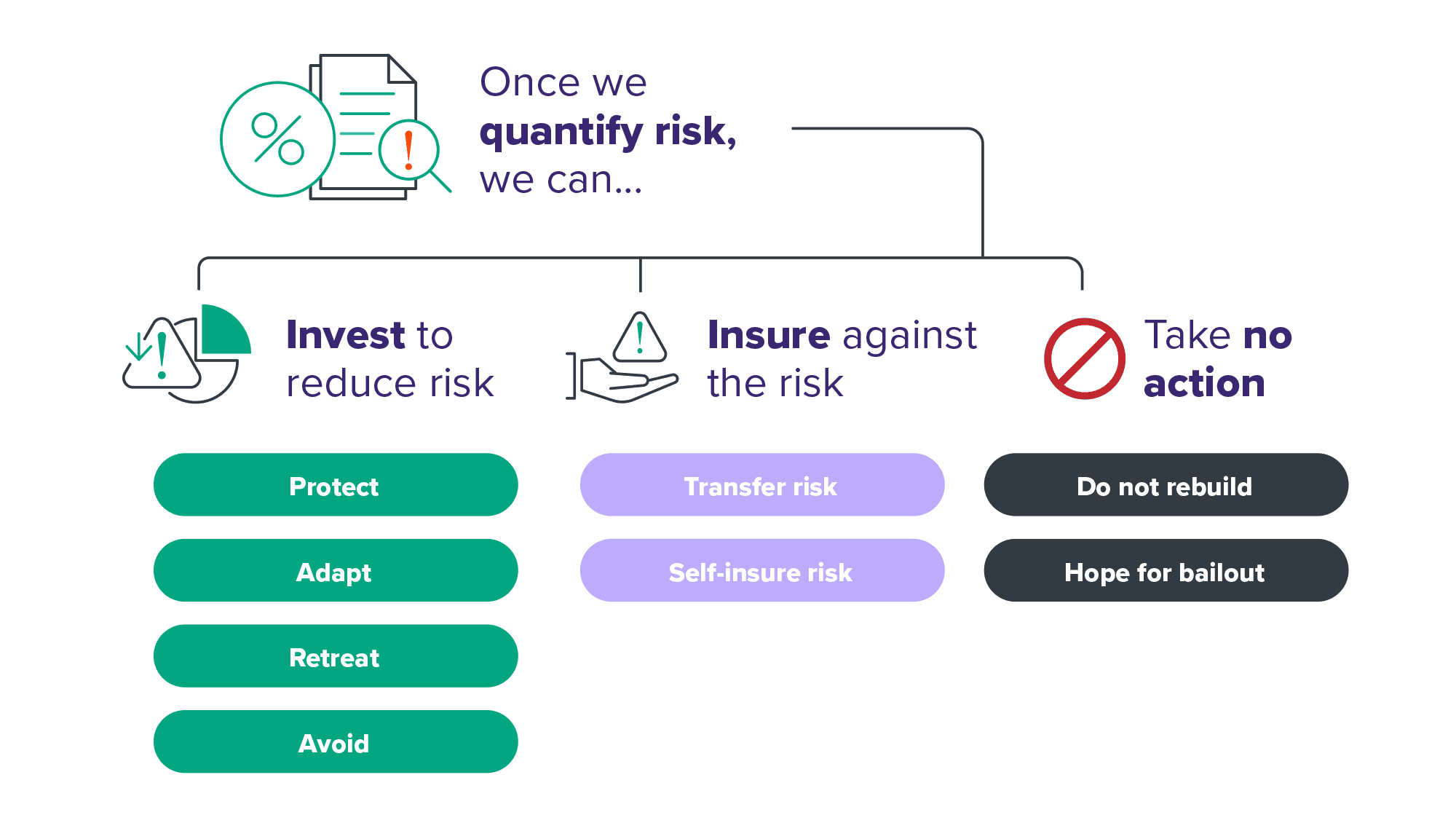
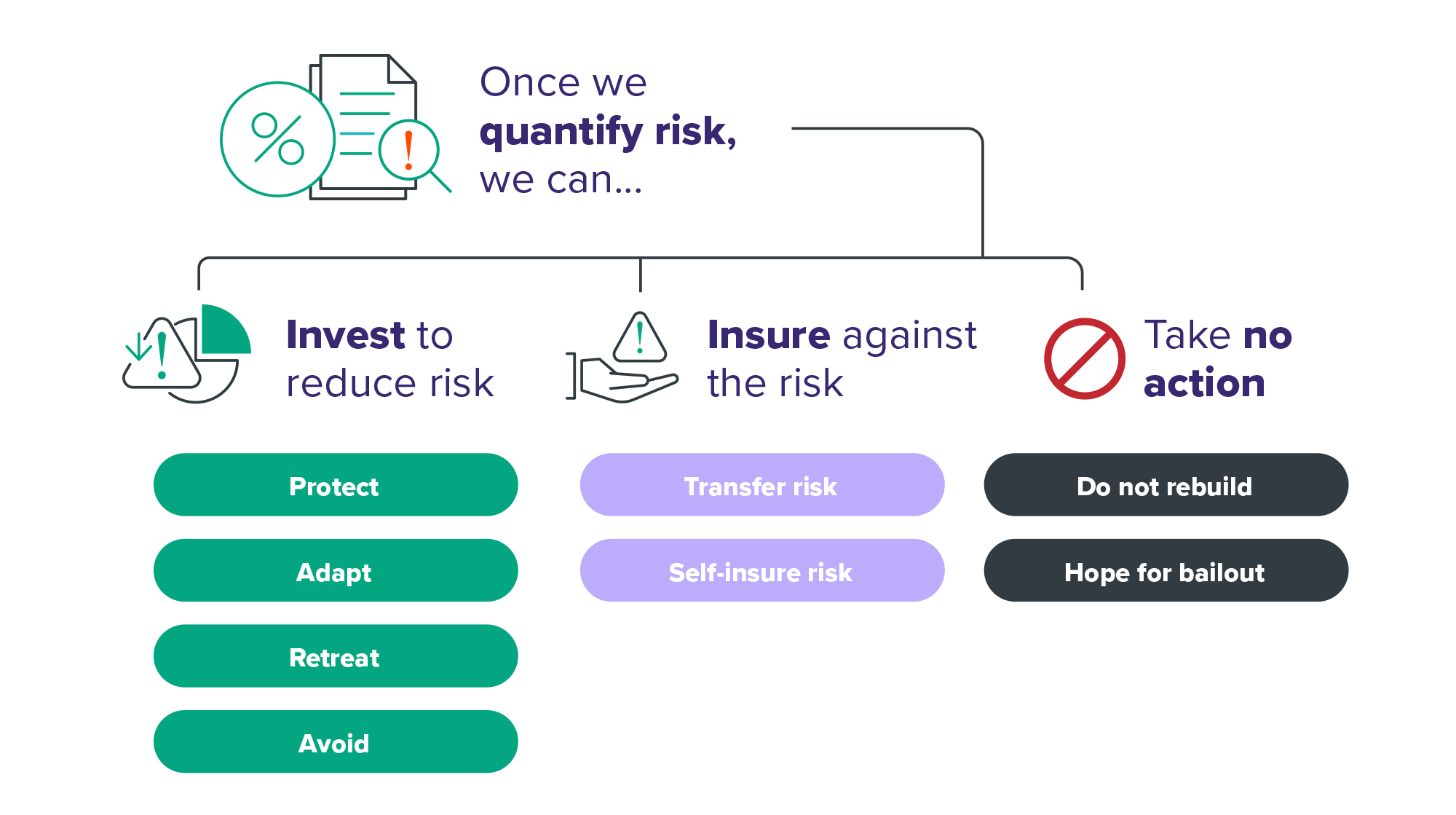
Infrastructure providers should take a proactive, cost-effective approach to identifying and managing risk. New Zealand has traditionally taken a reactive, costly approach to responding to events instead of addressing risk in advance. Infrastructure will never be invulnerable to risks and hazards, but asset owners should take steps to identify and address their exposure and vulnerability (Figure 30). Options include avoiding hazard-prone areas in the first place, building to higher design standards, employing protective measures like stopbanks, or incorporating nature-based solutions like wetlands for flood control.
Resilience investments need to be proportionate. Building infrastructure that is less vulnerable to hazards and threats may help to reduce the cost of responding to events and free up public investment for other priorities. But it is equally important that we do not overinvest in resilience as it will come at the expense of addressing other demand pressures. With limited resources, we need to target the most cost-effective risk-management solutions.
Insurance costs should help prioritise resilience investments. For infrastructure providers that insure their assets (including some forms of self-insurance), rising premiums can sharpen their focus on whether to maintain, strengthen or retreat. When the rising cost of insurance cuts into other priorities, real costs emerge from the decision to build roads in highly exposed locations, rebuild school buildings in the line of storm surges, or place new hospitals on flood prone land (Figure 31).
The most cost-effective option for managing risk should be chosen
Figure 31: Alternative approaches to manage risk to infrastructure and communities
Source: ‘Invest or insure: Preparing infrastructure for natural hazards’. New Zealand Infrastructure Commission. (2025).
Further work is needed to adequately address risks facing central and local government infrastructure. Budget reporting highlights the future cost of responding to natural hazard events as an unquantified fiscal risk.96 According to the Office of the Auditor-General’s most recent review, less than half of public assets were insured against damages as of 2013.97 Current coverage levels are not known but rising premiums make coverage less affordable. When central government infrastructure is under-insured, additional Crown funding will be needed to pay for any damage. The Crown is also expected to pay for 60% of the cost of repairing essential local government infrastructure damaged in an event.98 It also has an interest in ensuring that risks to property, such as flooding that is expected to worsen with climate change, are proactively managed.
Without a clear understanding of asset condition and exposure, government agencies and communities cannot plan proactively for resilience nor make informed decisions about relocation, reinforcement, or decommissioning.Raukawa Charitable Trust submission
Priority for the decade ahead
Identify cost-effective flood risk infrastructure
Forward Guidance: Storms and flooding will become more severe and frequent over the next 30 years due to climate change. Infrastructure investment will be needed to respond to damaging events and to improve community resilience. The challenge is to prepare proportionately and cost-effectively for a more volatile future.
What’s the problem?
More than 750,000 New Zealanders live in areas vulnerable to a one-in-100-year rainfall flooding event, with around $235 billion worth of buildings exposed.99 The risk from flooding and coastal inundation is rising as our towns and cities continue to expand and the climate warms.
As exposure increases, residential insurance premiums – which more than tripled in inflation-adjusted terms between 2010 and 2025 – may become prohibitively expensive or even unavailable in especially vulnerable parts of the country.100 For highly exposed communities, their long-term viability may depend on taking cost-effective steps to improve resilience to flooding. This won’t be the case for most places, meaning building flood protection infrastructure everywhere to manage risk is neither necessary nor cost-effective.
The Commission worked with Earth Sciences New Zealand to understand the exposure and severity of flood risk events likely to happen in New Zealand over the next 50 years. Risk – based on the change in average annual expected damage to private properties – is projected to increase most sharply for regions like Nelson-Tasman, Bay of Plenty and the West Coast. Coastal flooding from sea level rise is expected to be a larger driver of increased risk than more intense rainfall flooding events.
Local government is on the front line. Councils own and operate most stormwater and flood-protection assets, and many systems need strengthening. Well-targeted upgrades can deliver large benefits. For example, a $4 million upgrade to the Taradale stopbanks near Napier may have prevented as many as 10,000 homes from flooding in Cyclone Gabrielle.101
Not all investments will be this cost-effective, especially considering the infrequent nature of severe flooding events. Communities must weigh options such as upgrading infrastructure, limiting development in high-risk areas, improving hazard data, using insurance to transfer risk, or – in some areas – pursuing managed retreat. The planned requirement for Local Adaptation Plans can help structure these choices.
Central government has a direct stake in managing flood risk. As the largest infrastructure owner and investor, it benefits when communities and assets such as state highways, schools, and hospitals are better protected. Consistent, stable expectations, and clear co-funding settings all influence whether councils can act early or are left responding after disasters.
Taken together, sensible near-term steps would help New Zealand get ahead of escalating flood risk, rather than continually rebuilding after each storm.
Figure 32: Rising regional exposure to flood risk
Change in flood risk by region
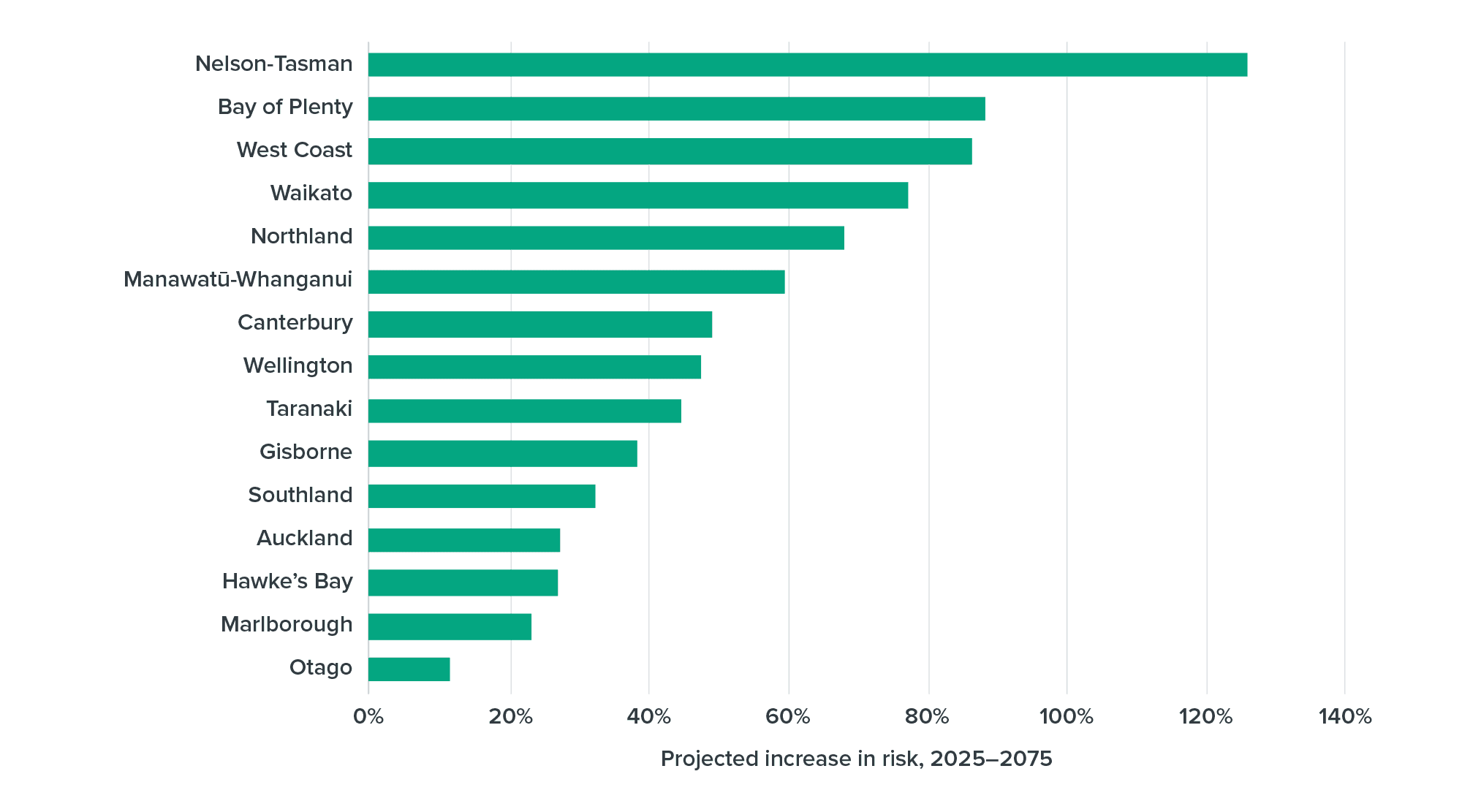
Note: Change in flood risk represents the change in estimated average annual losses to private buildings. Source: Infrastructure Commission’s analysis of Earth Sciences New Zealand modelling for the Commission.
Key actions
- Amend the Local Government Rating Act 2002 so councils can levy targeted rates on Crown-owned properties for natural hazard risk reduction investments. While Crown properties are mostly exempt from paying rates, the Act allows councils to charge them for water, wastewater and refuse services. Extending this to cover natural hazard events would provide a new revenue stream for flood protection and other risk reduction infrastructure.
- Improve access to high-quality natural hazard data so councils and communities can make more effective, affordable decisions and better manage insurance pressures. This will also support greater coordination to manage flood risk hazards.
- Ensure Government co-funding goes to well-designed, proportionate projects by requiring schemes to be assessed through the Infrastructure Priorities Programme.

Recommendation 3
Long-term investment planning
Introduce legislative requirements for capital-intensive central government agencies to prepare and publish long-term investment and asset management plans aligned with the Government’s fiscal strategy.
Implementation pathway
This could be implemented by:
- Amending the Public Finance Act 1989 (PFA) to require capital-intensive central government agencies to produce and publish 10-year asset management and investment plans every three years.
- Requiring plans to include multiple investment scenarios, including at least one that is aligned with the Government’s expectations of funding for that sector and one that is aligned with the Commission's independent assessment of infrastructure needs (Forward Guidance).
- Requiring plans to identify the drivers of investment, including asset renewal or replacement, changes in population, changes to levels of service, or responses to risks.
- Ensuring plans are integrated with the fiscal management approach, Investment Management System and related Budget processes.
Responsible agencies
The Treasury (for PFA reform/policy work), capital-intensive agencies (to develop asset management and investment plans)
Timeframe
Commence policy work in 2026 with long-term plans to follow.
Recommendation 4
Predictable Government funding signals
Extend the horizon over which Government plans its infrastructure funding intentions and communicate these intentions to agencies and the public.
Implementation pathway
This could be implemented by:
- Government, supported by advice from the Treasury, using agency long-term asset management and investment plans to make decisions about its infrastructure funding intentions across the Budget forecast period. Funding intentions could either mean sectoral funding allocations or project-specific funding allocations.
- Publicly communicating these intentions through Budget documentation to support project sequencing and investment confidence.
Responsible agencies
The Treasury
Timeframe
Subsequent to agencies’ long-term asset management plans being in place.
Recommendation 5
Multi-year budgeting
Adopt multi-year budgeting arrangements that leverage and reinforce high-quality infrastructure planning, delivery and asset management practices.
Implementation pathway
This could be implemented by:
- Establishing multi-year funding arrangements (ie, Budget appropriations) for capable agencies managing repeatable projects or programmes, and/or
- Committing funding for projects beginning beyond the current Budget year where agencies show planning maturity, and/or
- Delegating greater infrastructure project decision-making autonomy to capable agencies within agreed parameters. Agency capability should be determined by independent assessments to ensure high-quality infrastructure planning, delivery, and asset management practices.
Responsible agencies
The Treasury
Timeframe
Subsequent to recommendation 4 being implemented.
Recommendation 6
Asset management performance reporting
Require, through legislation, capital-intensive central government agencies to report on asset information and asset management performance, including progress against their investment and asset management plans.
Implementation pathway
This could be implemented by:
- Amending the Public Finance Act (PFA) 1989 to require annual reporting on asset information and asset management performance and service outcomes.
- Defining reporting requirements for key asset information and performance metrics for service quality, risk, and delivery progress.
- Introducing assurance processes that use these metrics to monitor improvement.
Responsible agencies
The Treasury, responsible agencies
Timeframe
Commence policy work in 2026 with asset management reporting to follow.