Content
Content

Four themes for change
As an independent advisor to the Government, the Commission takes a sector-wide view to encourage and promote infrastructure development that enhances the wellbeing of New Zealanders. The Plan has a specific focus on improving the performance of the public sector as an asset owner, investor, and rule-setter. It identifies four themes and 16 recommendations that will make a material difference to how we plan, fund and deliver infrastructure in New Zealand.
Planning what we can afford
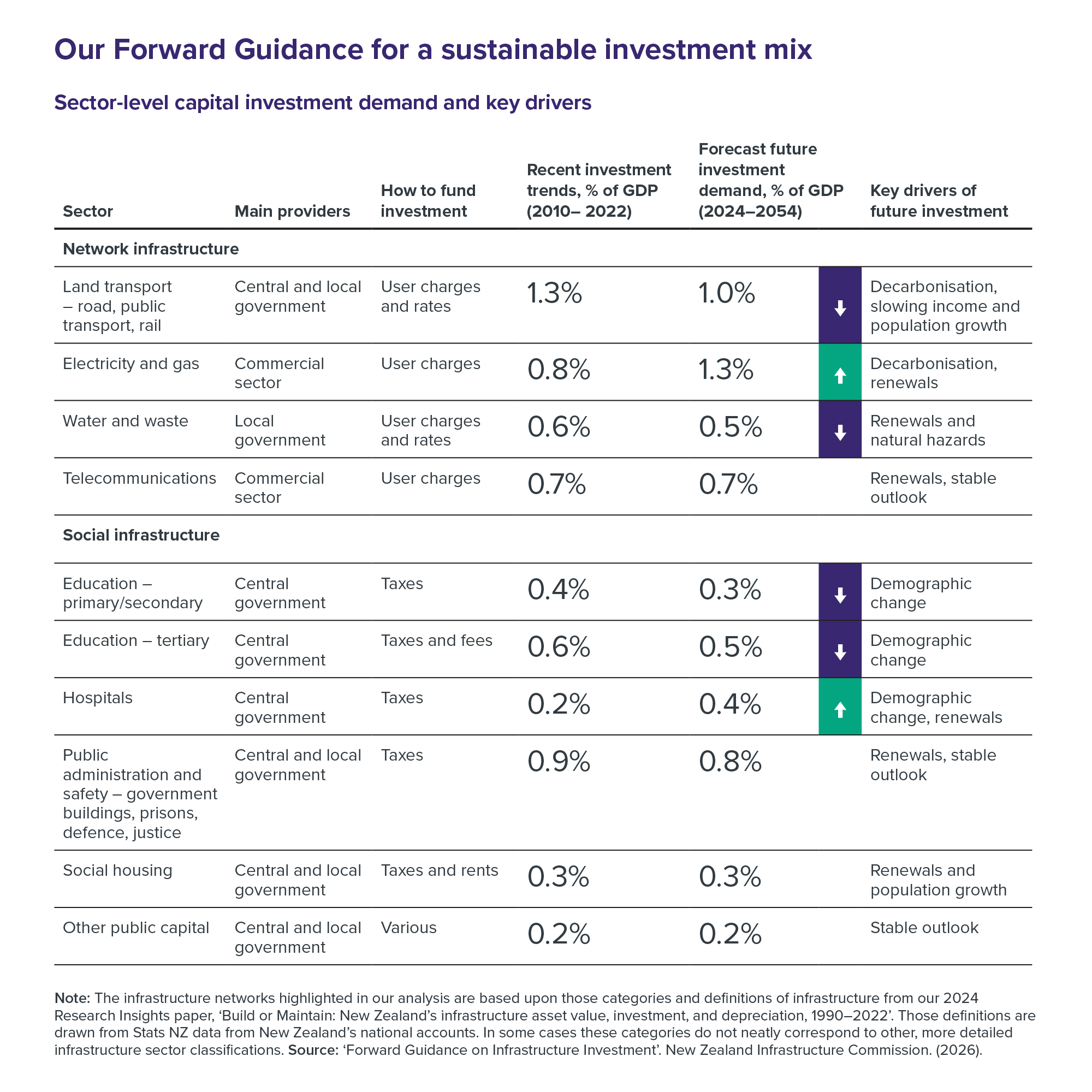
The National Infrastructure Plan provides a fundable and coordinated view of what we can afford to spend on infrastructure. Our advice on what we should be spending on different types of infrastructure over the next 30 years is called Forward Guidance (Table 1). New Zealand can expect to invest between 5% and 7% of GDP on capital infrastructure projects every year, but the spending mix must change as our demographics and economy change. Increased investment in health and electricity will need to be balanced out by proportionately less spending on sectors where there will be less demand over the long term.
How we price and fund different types of infrastructure matters. Network infrastructure such as roads, telecommunications and water should be funded by users. This would free up general taxes to pay for social infrastructure such as hospitals and schools. In transport, this requires reforming the investment and funding system to ensure spending commitments are in line with what we recover from users.
New Zealand spends more on land transport than any other infrastructure class, yet current investment plans exceed what can be sustainably funded by users. Without stronger prioritisation, this risks displacing investment in other sectors and increasing pressure on general taxes. Reform is needed to better align transport investment with what users can fund, supported by clearer and more independent oversight to ensure spending is focused on maintaining existing networks and delivering new projects only where they respond to demand and provide clear value for money.
Our Forward Guidance for a sustainable investment mix
Table 1: Sector-level capital investment demand and key drivers
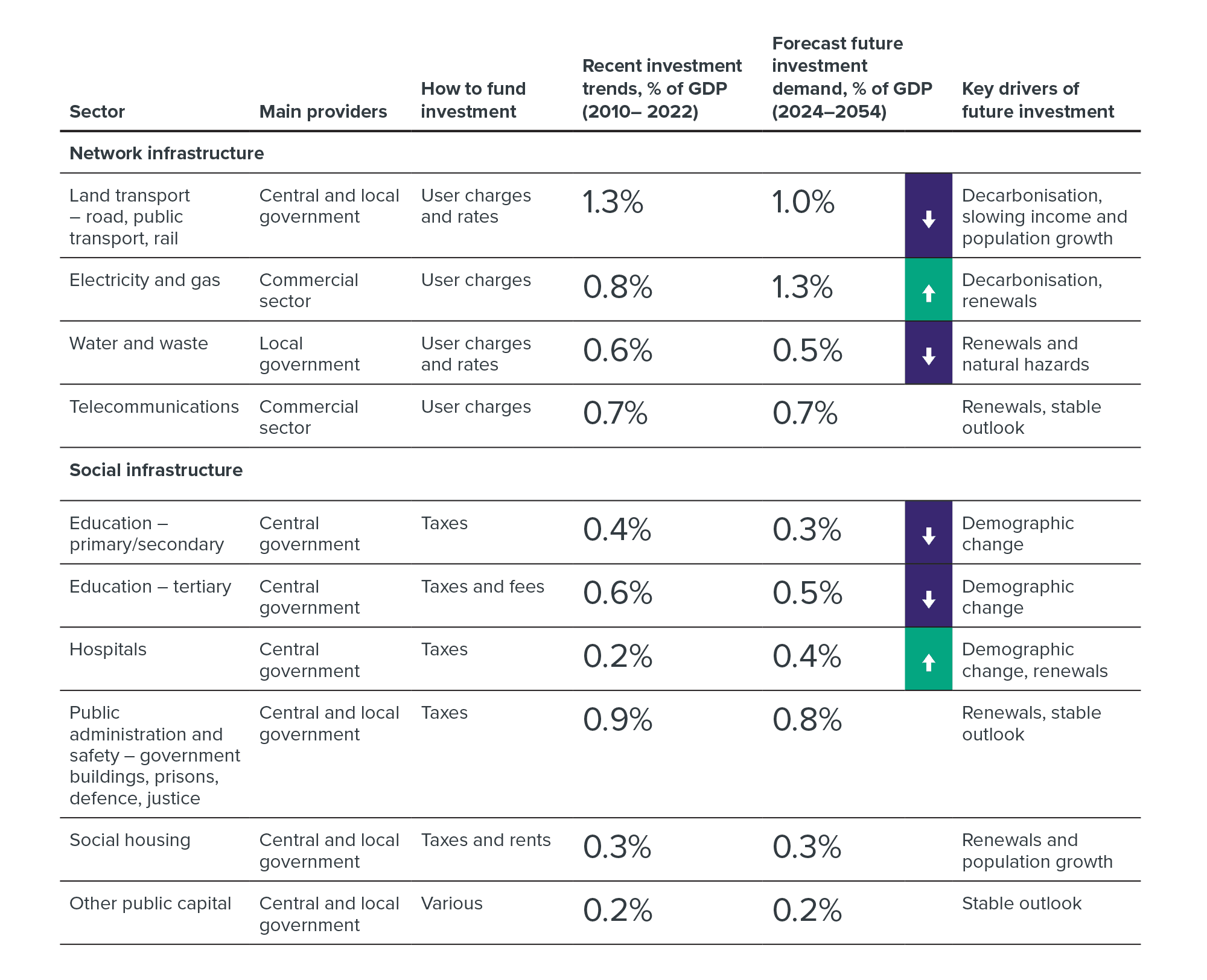
Note: The infrastructure networks highlighted in our analysis are based upon those categories and definitions of infrastructure from our 2024 Research Insights paper, ‘Build or Maintain: New Zealand’s infrastructure asset value, investment, and depreciation, 1990–2022’. Those definitions are drawn from Stats NZ data from New Zealand’s national accounts. In some cases these categories do not neatly correspond to other, more detailed infrastructure sector classifications. Source: ‘Forward Guidance for Infrastructure Investment’. New Zealand Infrastructure Commission. (2026).
Looking after what we’ve got
Most of the infrastructure we will need for the next 30 years already exists. Being good guardians, or kaitiaki, will require spending as much as 60 cents in every dollar of infrastructure investment to replace or rebuild our existing assets as they wear out.4
New Zealand ranks fourth to last in the OECD at asset management, the practice of looking after our existing infrastructure.5 Leaky hospitals, mouldy army barracks and deferred maintenance across the public sector are symptoms of a wider system failure. To address this, central government agencies should be required to develop long-term asset management and investment plans that set out how they will maintain their existing assets and what new, demand-driven investments might be possible under different funding scenarios. Agencies also need to be aware of the risks that could damage or disrupt their infrastructure, including natural hazard events such as earthquakes and floods, and threats such as cyber-attacks or espionage. Building more resilient infrastructure can have economic and social benefits, but investments need to be cost-effective and proportionate to the value and criticality of the services and assets being protected.
The first rule of asset management is to understand your assets. This will enable central government agencies to outline their future investment needs and set aside enough money to ensure they can be met. Transparency and independent review can help to ensure that we’re doing the work that needs to be done, and that we avoid diverting maintenance spending into new capital investment to the cost of future generations.
Prioritising the right projects
Central government agencies need to ‘think slow and act fast’ when they’re planning new investments. This means considering and testing a range of options – including low-cost or non-built solutions – before identifying a preferred way forward. Investments seeking Budget funding should have robust business cases and be consistent with what agencies have been signalling in their long-term plans.
The existing assurance system to scrutinise projects and long-term plans is fragmented and inconsistent. This makes it harder for decision-makers to make the most strategic investments. The Commission’s Infrastructure Priorities Programme (IPP) aims to help by producing a vetted ‘menu’ of proposals by examining whether they’re affordable, deliverable and aligned with strategic priorities. Other tools, including an assurance process to check whether long-term asset management and investment plans are credible and fundable, are needed to ensure we’re investing our scarce resources in the best way possible.
Keeping infrastructure investment affordable requires changing how we approach large projects. With more megaprojects in planning than the country can realistically fund or deliver, providers should prioritise low-cost, incremental upgrades over waiting for expensive, fully formed solutions. This is especially important in health and transport, where megaprojects threaten to crowd out other priorities like essential maintenance and renewals. Our Forward Guidance suggests we can maintain and gradually improve these networks, but in transport we won’t be able to deliver the full pipeline of major road and rapid-transit projects without significant – and likely unacceptable – rises in user charges. A more disciplined approach to prioritising, sequencing, and sizing major projects, grounded in strong analysis of need, cost, and asset performance, will help keep investment programmes sustainable and high value.
Making it easier to build better
The National Infrastructure Plan outlines how we can clear away the hurdles facing infrastructure investment. It calls for a persistent effort to improve the operating environment for infrastructure and develop the capacity and capability of our infrastructure workforce to build and maintain the infrastructure we need. It is often too expensive to deliver infrastructure in New Zealand, too difficult to make best use of the infrastructure we already have, and too difficult to coordinate organisations.
We need efficient legislation and regulations that better serve New Zealanders. At present, our land-use rules often prohibit development in the very areas where infrastructure is most cost effective: for example, limitations on concerts mean stadiums cannot generate the revenue to cover depreciation and poor transport pricing means we spend a lot to build roads to handle peak capacity instead of trying to spread use throughout the day. A key area for improvement is the resource management system, which has significant impacts on how we can build, maintain and operate all types of infrastructure.
Better spatial planning is needed to coordinate land use and infrastructure and shape how our cities and regions grow. Effective regional spatial plans need statutory weight, alignment with other planning processes, and real influence over infrastructure funding and sequencing – they can’t just be regional wish lists.
Upcoming infrastructure project choices
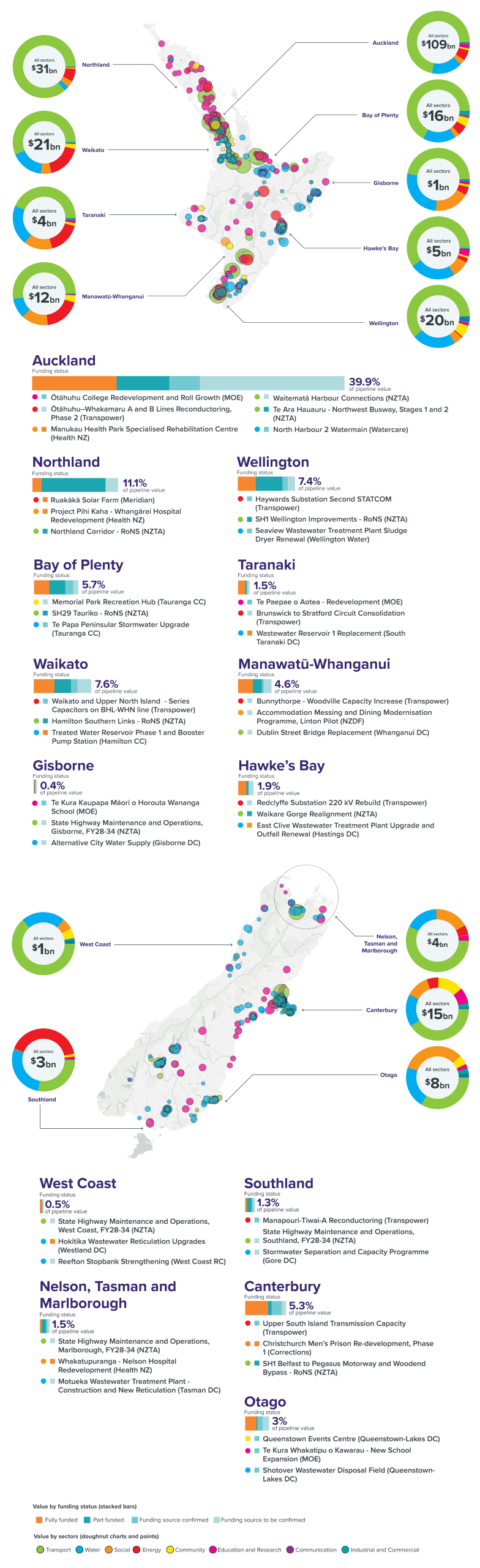
Figure 1: Funded and unfunded projects in the National Infrastructure Pipeline