About this research
Flooding, which includes both inland and coastal flooding, is already one of New Zealand's most costly natural hazards, and the costs are rising. Climate change is increasing flood frequency and severity, sea levels are rising, and communities and infrastructure networks that were designed for yesterday's conditions will face greater pressure in the decades ahead. How New Zealand responds to this challenge will shape the resilience of its infrastructure system for generations.
Investment in resilience and flood protection competes with other pressing infrastructure demands: renewing ageing assets, meeting population growth, and the need to decarbonise our economy. Central government, local government and other infrastructure providers face real constraints on what they can spend.
This means choices have to be made: the scale of the response needs to be proportionate to the scale of the problem. Making those choices well requires evidence on the size of the risks we face, where it is concentrated, and how it will change over time, so that limited resources can be directed where they are needed most.
Te Waihanga commissioned Earth Sciences New Zealand to complete this work.
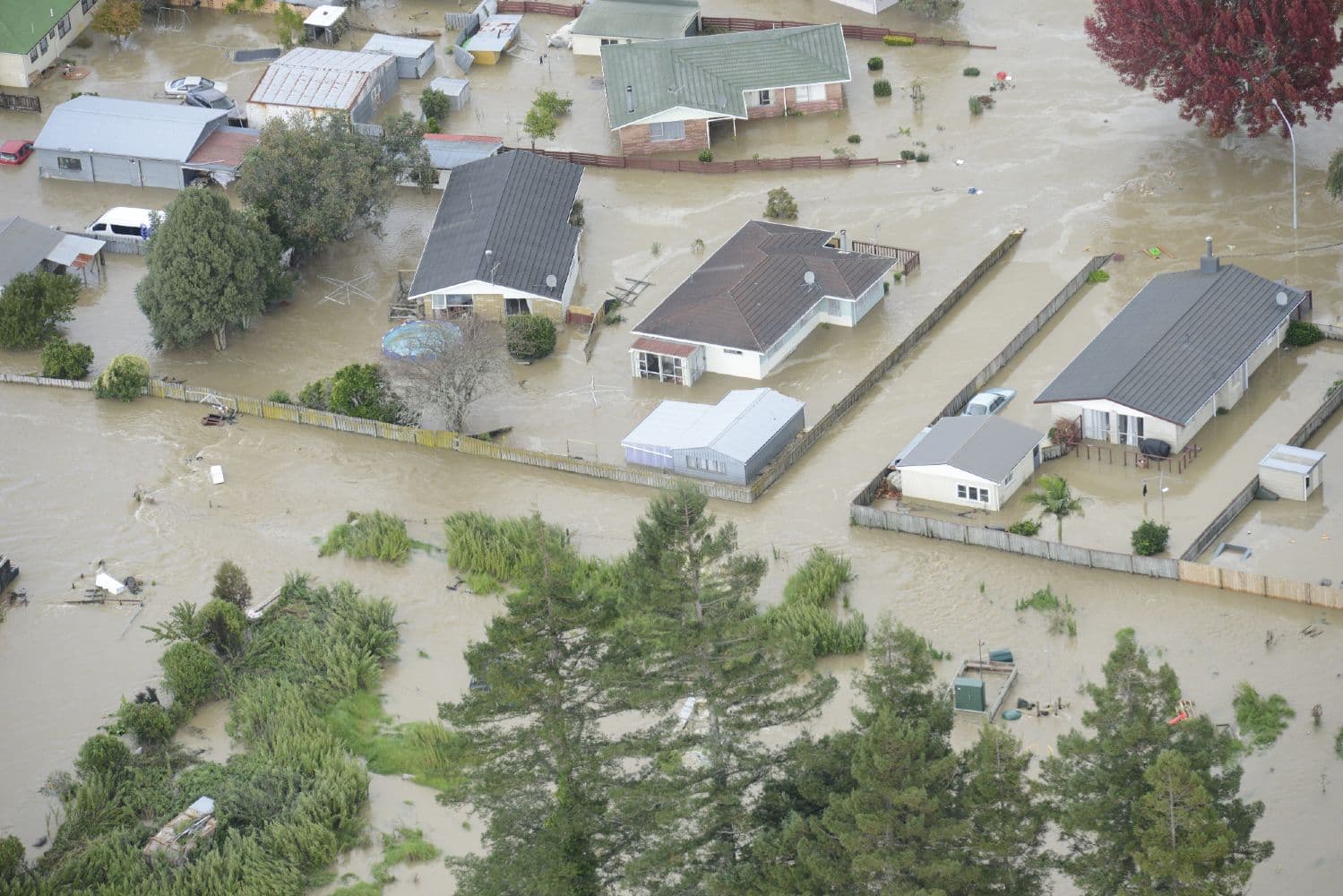
Image: Flooding of the river in Edgecumbe on April 6, 2017. Photo courtesy of NZFloodPics.
When waters rise: Climate change, regional risk and infrastructure investment
Download
Estimating National-Scale Losses to Infrastructure from Natural Hazards: Phase 2 – Future Climate Scenarios, Regional Disaggregation and Flooding Impacts on Buildings
Download
Databook
xlsx
Download

Key findings
- Under the SSP3-7.0 high emissions climate scenario, average annual losses for infrastructure from inland flooding are expected to grow from about $300 million per year in 2025 to almost $465 million by 2075. Coastal flooding losses are expected to grow from $165 million per year in 2025 to $325 million in 2075. These losses reflect the financial book value losses to infrastructure, not the full replacement value.
- Key regions with highest increases in flood losses to infrastructure relative to their network size under the SSP3-7.0 climate scenario:
- Hawke’s Bay: From $43 million in 2025 to around $89 million by 2075
- West Coast: From $12 million in 2025 to around $24 million in 2075
- Nelson-Tasman: From $13 million in 2025 to around $25 million in 2075
- Manawatū-Whanganui: From $53 million in 2025 to around $85 million in 2075
- Bay of Plenty: From $45 million in 2025 to around $78 million in 2075.
- In 2025 and in total dollar terms, Auckland is the region with the highest flood losses at around $66 million. However, by 2075, climate change sees Auckland flood losses (around $97 million) overtaken by Canterbury (around $113 million) and Waikato (around $107 million) in the SSP3-7.0 scenario.
- Average annual flood (inland and coastal) losses to private buildings are expected to grow from $270 million per year in 2025 to around $420 million per year by 2075 in the SSP3-7.0 scenario. These losses reflect the replacement value of private buildings.
- Regions with highest private building losses as a share of asset value include West Coast, Hawke’s Bay, Bay of Plenty, and Nelson-Tasman.
Published 9 July 2026