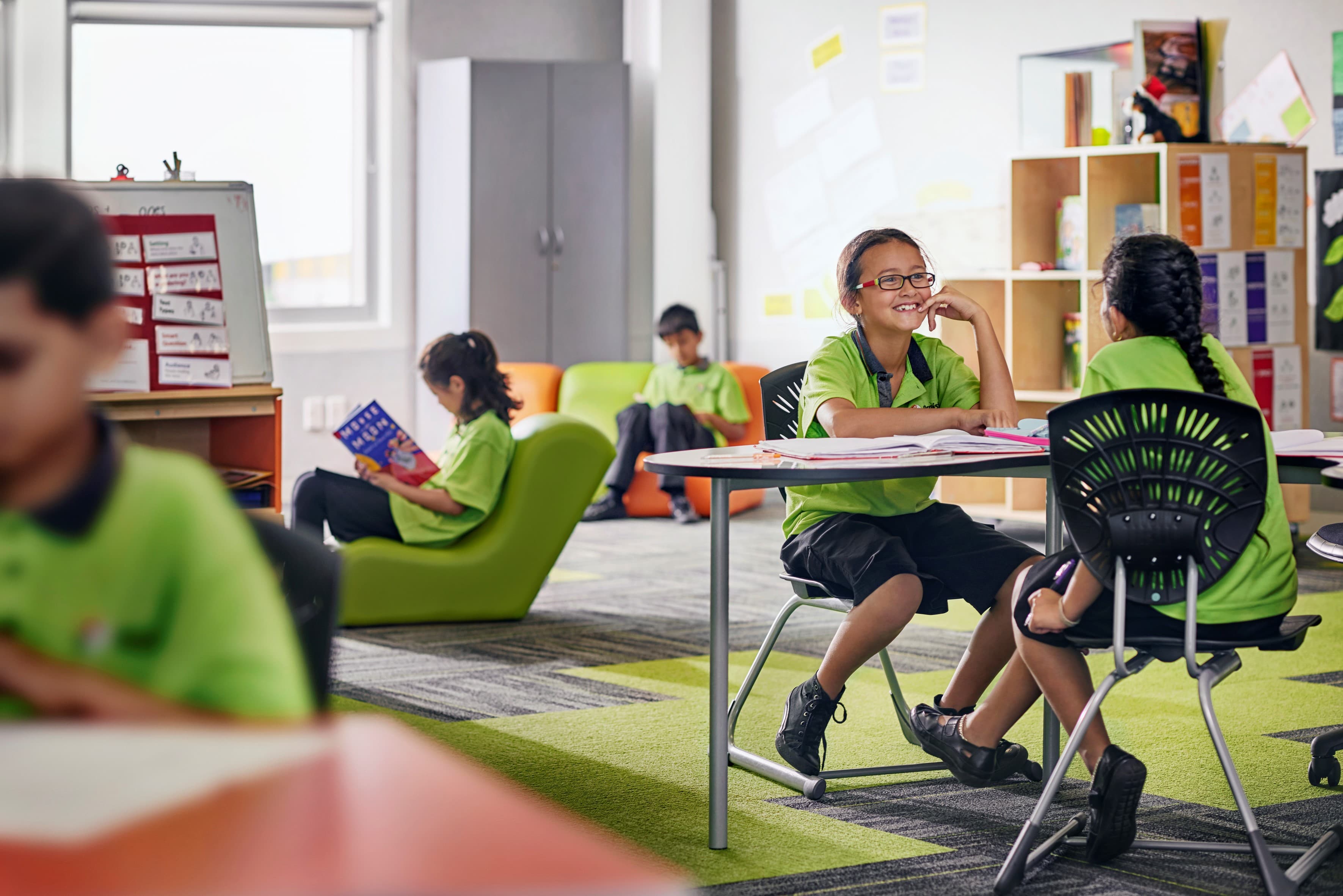
The physical environment for education – such as adequate heating, ventilation, enough outdoor space, and green space – creates a learning and teaching environment that can help create positive educational outcomes.
The education sector is dependent on other infrastructure sectors performing very well – including water, energy, transport, and telecommunications – if it is to contribute strongly to an educated population, skilled workforce and thriving communities.
Education infrastructure includes the buildings, classroom, laboratories, gymnasiums, theatres, libraries, equipment, playgrounds including courts and sports fields that constitute the learning environment in which ECE centres, schools, and tertiary providers operate and deliver services.
This research looks closely at the education sector in New Zealand. It describes the state of the sector, the issues it faces as well as those it needs to prepare for. The work is based on our own research, a survey of infrastructure owners as well as conversations with people within the sector.
Key findings
- Our education buildings are ageing (the schooling estate has an average age of 42 years) and there are varying levels of quality across primary and secondary schools due to deferred maintenance and capital investment.
- Digital technologies allow for new forms of teaching, learning through digital mediums, and the augmentation of in-class content and experiences.
- Education infrastructure will need to adapt to changing demographics (especially with respect to ethnicity, population size, age and place of residence). Increasing urbanisation and population growth are likely to trigger supply shortages in high growth areas, and surpluses in relatively lower-growth areas, which further highlights the need for effective long-term planning, prioritisation and flexibility of capital investment.
- The international education sector has been significantly impacted by COVID-19. As the market for education becomes increasingly international, New Zealand will need to look at how it can provide an offering to international students that is tailored to their needs.
- Physical infrastructure that adheres to sustainability principles will become increasingly important as New Zealand transitions to a carbon neutral, climate resilient world.
- The devolved governance model which has historically characterised the education sector has meant that there hasn’t been a national, system-wide approach to planning and investment in infrastructure. Recent reforms – such as the Education Work Programme, Tomorrow’s Schools Reform and the Review of Vocational Education - aim to address many of these issues.
Sector state of play: Education
Download
Published on 1 May 2021