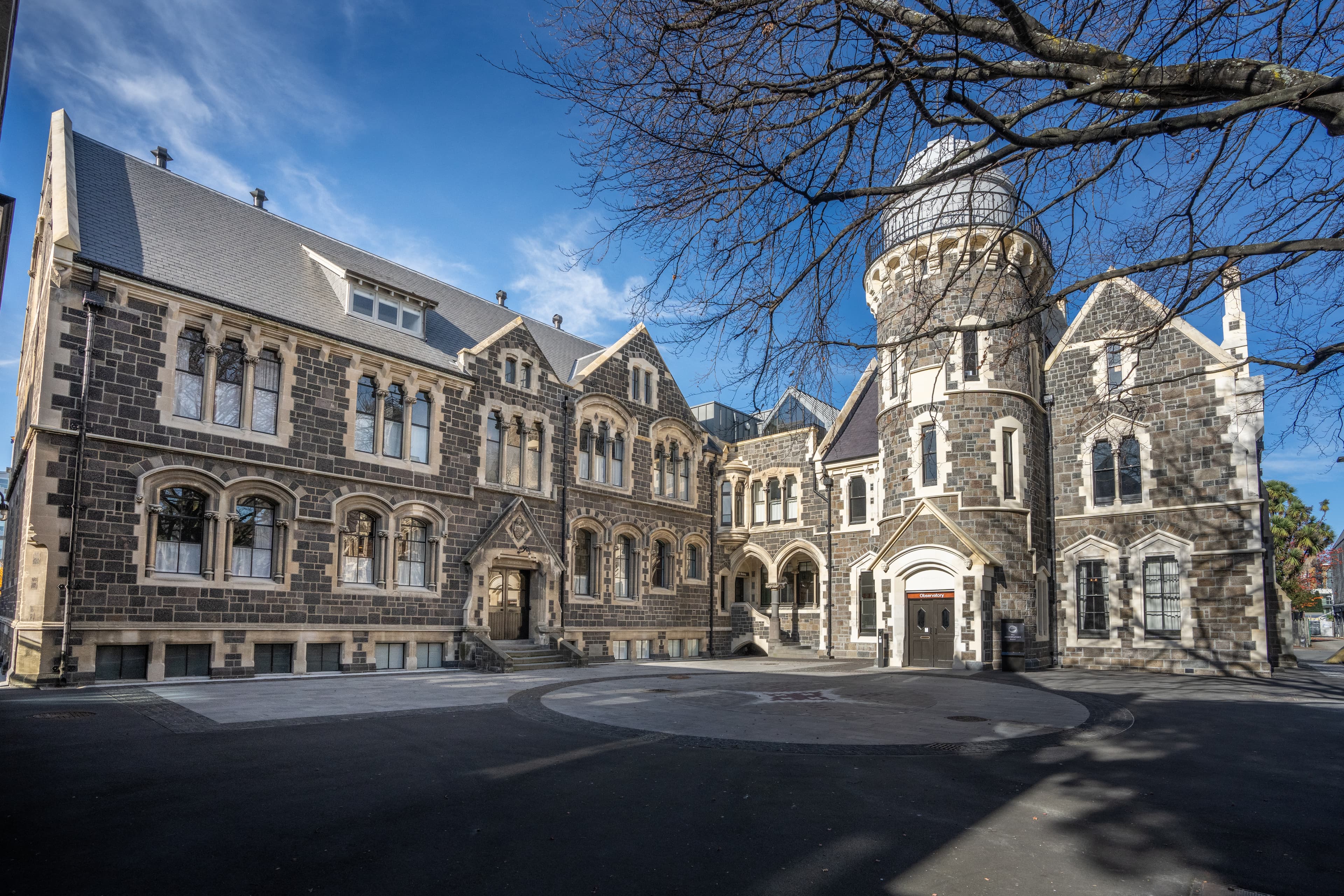
The rebuilding of Christchurch’s Arts Centre after the earthquakes was a massive undertaking full of unknown unknowns. Its success came through having a collaborative contract, fair risk allocation and having the right people. All up, it took just over a decade to complete and cost over $200 million.
The Arts Centre takes up a whole city block, and is a collection of 21 gothic revival style stone buildings, built in the late 1800’s and early 1900’s. These are Category 1 heritage listed buildings, so had to be painstakingly rebuilt from the inside out to preserve their historic integrity. The project’s complexity was further added to by its dealing with an unusual material – cut stone blocks – and fact that many of the buildings were inter-connected and had been built by different teams using different construction methods over a 40 to 50 year period. This meant the project was extremely unique and challenged a lot of the industry thinking and rules of thumb when it commenced.
Because of the extensive ‘unknown unknowns’ around dealing with cut-stone construction, the Arts Centre Trust took on this risk themselves from the start – assembling and directly employing a team of stone masons from around the world and purchasing the specialist tools needed for them to do these parts of the work.
However, cut-stone was only a specialist part of the work, the remainder being more general construction techniques such as bracing, flooring, carpentry, etc. This work saw multiple contractors using different forms of NZS 3910 during the project’s initial stages. However, the odd, inter-connected nature of these buildings raised many unknowns, making it poorly suited to NZS 3910. So the final contract used for ‘Stage 2’of the development was an NEC4 target cost contract. This set a target price for the work, and where the work comes in under the target, these savings are shared between the project owner and the contractor. Which gives both parties a stake in the outcome and a joint incentive to work towards this. In this instance, it incentivized the contractor to be involved early to develop the sequence/logic in which they would strengthen the building before the new fit out.
Looking at the restoration of the observatory hotel in particular, this project commenced with a 31-month project schedule and was completed in 33 months including the shutdown periods for the Covid 19 pandemic. The project finished under the target cost and hence the gain share portion was split between the client and the contractor.
Stage 2 project manager Nick Hawkins says risk allocation was a major contributing factor to the success of the project. The style of the NEC4 contract allowed for the estimated cost of the known unknowns to be held by the client and delivered as packages to the contractor as design and more information filled out the detail of what was required. This allowed the contractor to price what was reasonable and note things that weren’t included but were allowed for in the project schedule.
However, while the contract is a key driver to incentives behaviors, having the right mindset from the people involved in the project is paramount. In the case of stage 2, there was a positive outlook on the project with the intention to do the best by the client right from the start. Regular communication and collaboration managed to keep this intact to the completion of the job.
“Collaborative contracts with the right apportionment of risk allocation and most importantly the right team foster very professional, respectful relationships – and so deliver great outcomes for highly complex projects,” Nicks says.
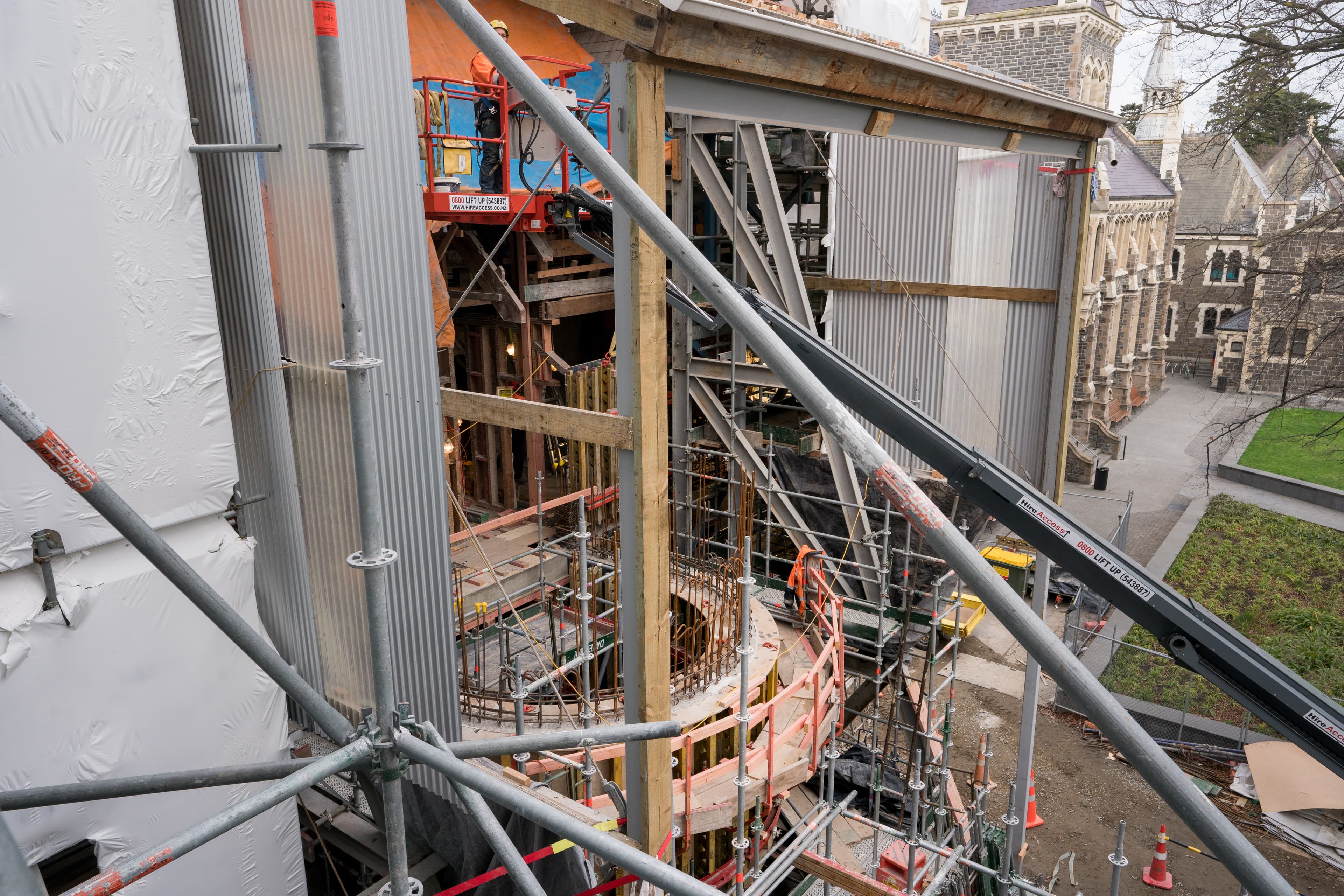
The Arts Centre takes up a whole city block, and is a collection of 21 gothic revival style stone buildings. All up, it took just over a decade to complete the rebuild at a cost of over $200 million.