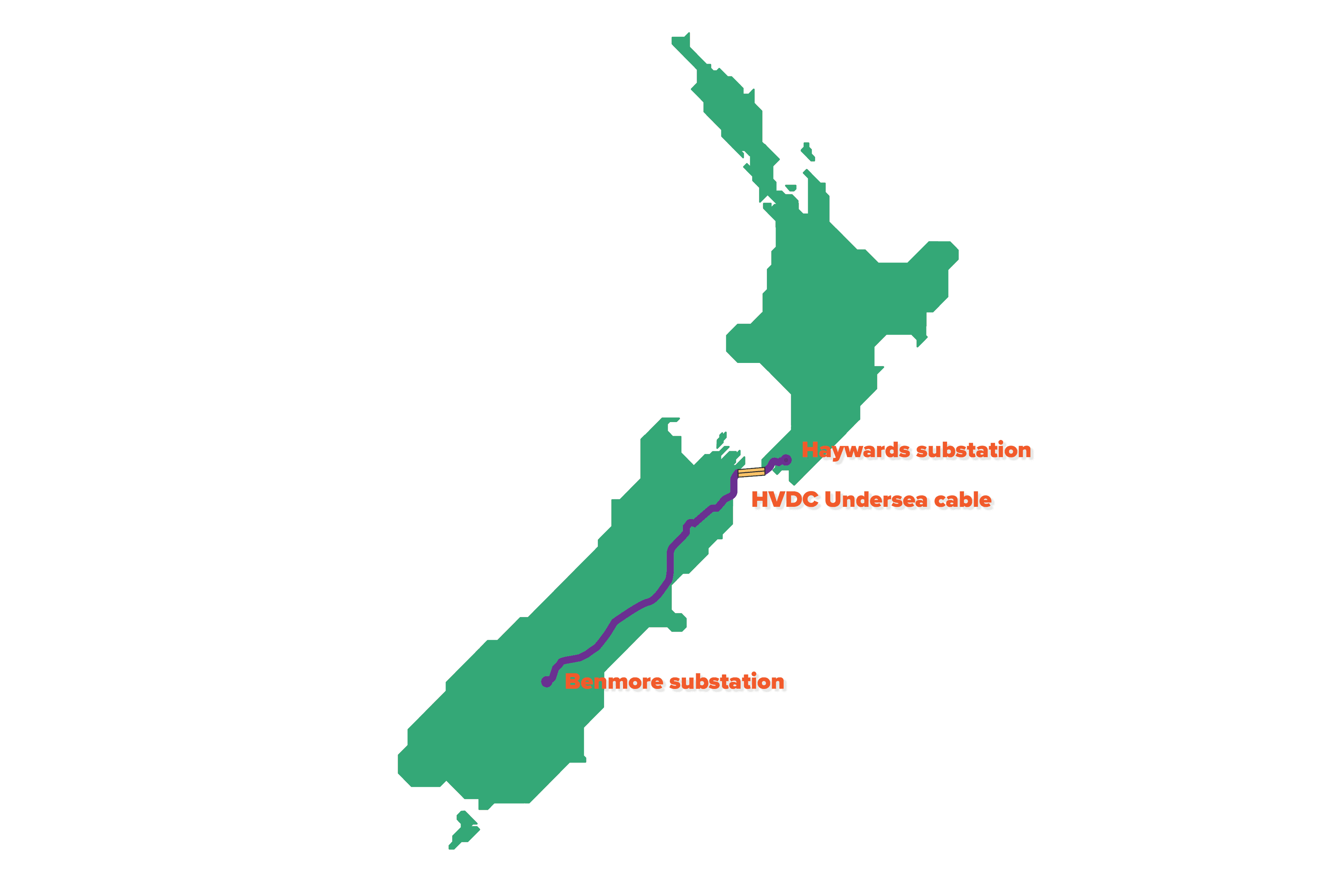
Prime Minister Keith Holyoake tripped the switch. A siren blared, a generator at the mighty Benmore hydroelectric dam roared to life, and a map lit up showing the 610-kilometre link between Benmore and the Haywards substation north of Wellington.
May 15, 1965, wasn’t the first day South Island power flowed north via the high voltage direct current (HVDC) transmission line, but it marked the official inauguration of a scheme that created the national grid.
The superlatives flowed as freely as the electrons.
Leading the charge was Prince Bertil of Sweden, who had earlier charmed the travelling press pack by changing a blown tyre on the prime ministerial car.
Over cake baked by a Dunedin carpenter in the shape of the dam – an engineering feat so large it could hold all the water in Wellington Harbour with space left over – Bertil heaped praise on the HVDC, which was the longest and largest transmission link in the world at the time.
“It is full of technical ‘firsts’ and ‘biggests’ in the world, and it will arouse international interest and admiration for New Zealand,” the prince said, noting that the cables – built by a British firm – were made possible using Swedish technology.
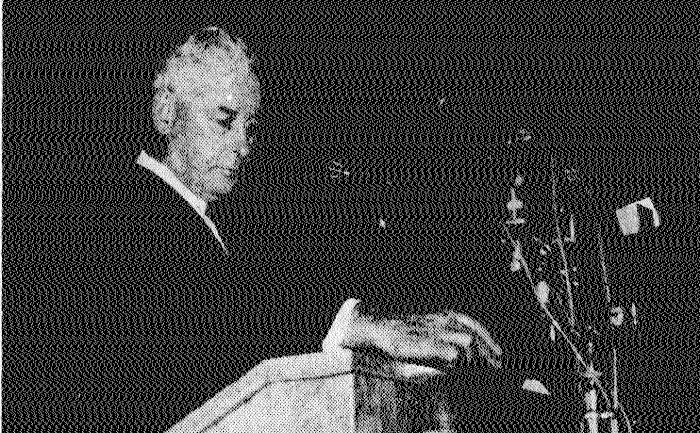
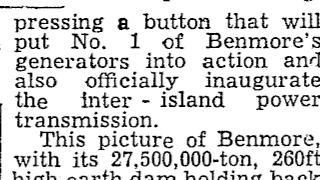
Clippings of news articles at the time.
The Evening Post was more prosaic: “South Island water could be burning your toast tomorrow,” read the headline in the Wellington paper.
The possibility of connecting hydro resources in the South Island with the fast-growing North Island via cables under the Cook Strait had been mooted as early as the 1940s, before there was a proven technology solution. In 1950, government engineer Bill Latta presented the link as a solution to the plight facing the North Island: its hydro resources, he said, would be exhausted within 10 to 20 years.
Latta got it right.
Since 1965, Benmore and the HVDC link have burned untold slices of toast in the North Island, kept the lights on, and bound New Zealand together into a single national grid. For grid operator Transpower, the mission is clear: keep it going.
Seabed turbulence and global supply shortages
For more than 30 years, the three cables forming the submarine section of the HVDC have lain on the seabed, exposed to the turbulent waters of the Cook Strait. In videos released by Transpower, they resemble artificial reefs, their steel armour encrusted with sea life and surrounded by fish.
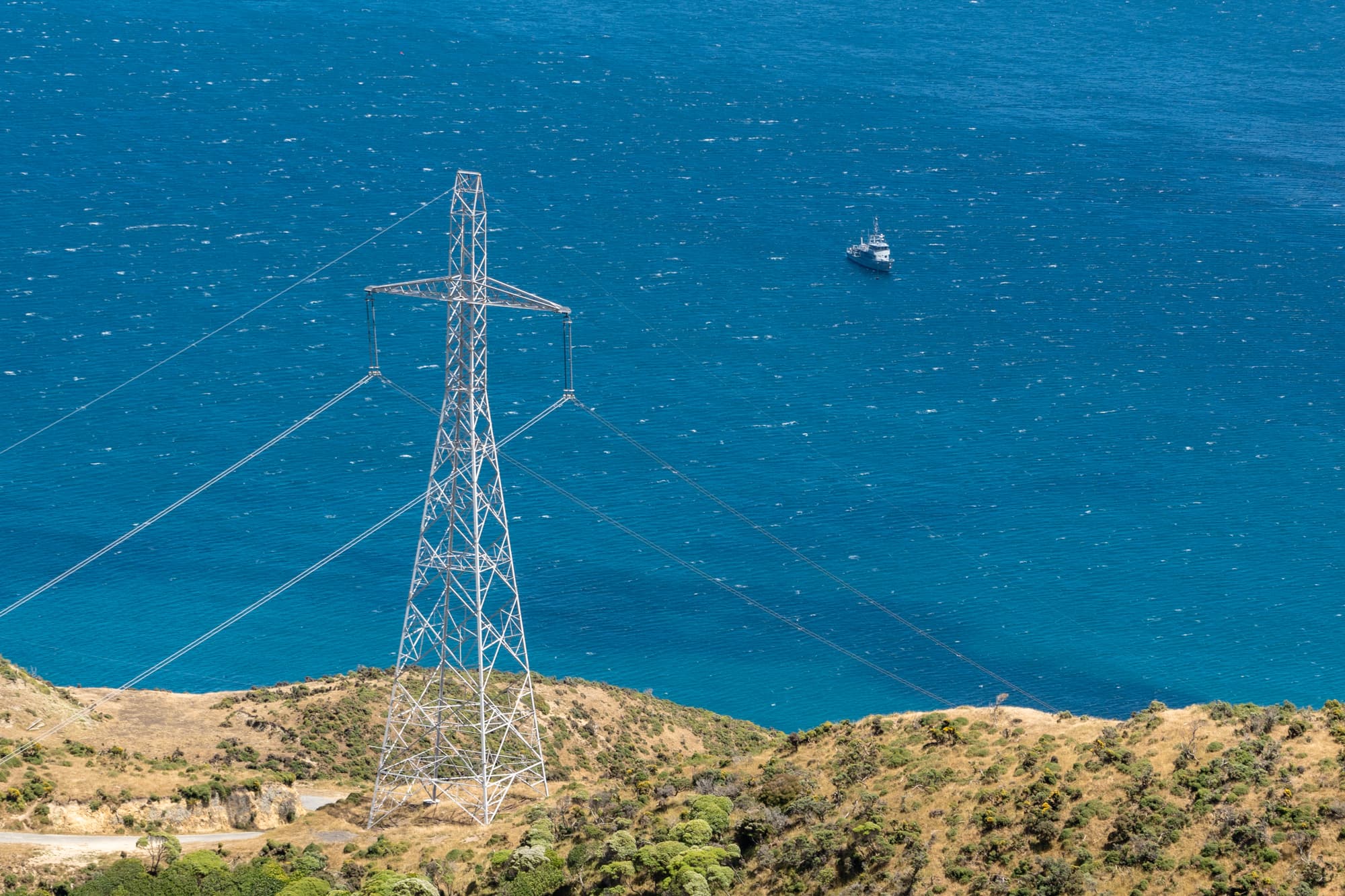
From Ōraumoa, or Fighting Bay, in the South Island, the Cook Strait cables trace a 40-kilometre route to Oteranga Bay, at the bottom of the North Island. Hydro power flows north and intermittent renewable and geothermal electricity flows back south when the sun is shining and the wind is blowing.
Roy Noble, a Transpower veteran who leads the HVDC upgrade project, says the direction of flow changes at least once a day.
“The link is a generation manager for the country, providing both islands with access to the lowest cost available generation at any given time,” he says.
The three submarine cables – which are spaced apart to prevent a catastrophic break – can carry up to 15% of peak electricity demand. Losing one would be manageable, Noble says. Losing two would halve the capacity of the HVDC. Losing all three is unthinkable.
“It wouldn’t be pretty,” Noble says.
The current set of cables was installed in 1991 and commissioned in 1992, replacing the originals from the 1960s. Each year, Transpower deploys remotely operated vehicles and divers to inspect the casing for fractures or frayed fibres – searching for weaknesses that could lead to a break. There has only been one failure so far, in 2004, when a section of cable had to be replaced. However, as the cable link approaches its 40-year design life in the 2030s, the risk of failure is expected to increase significantly.
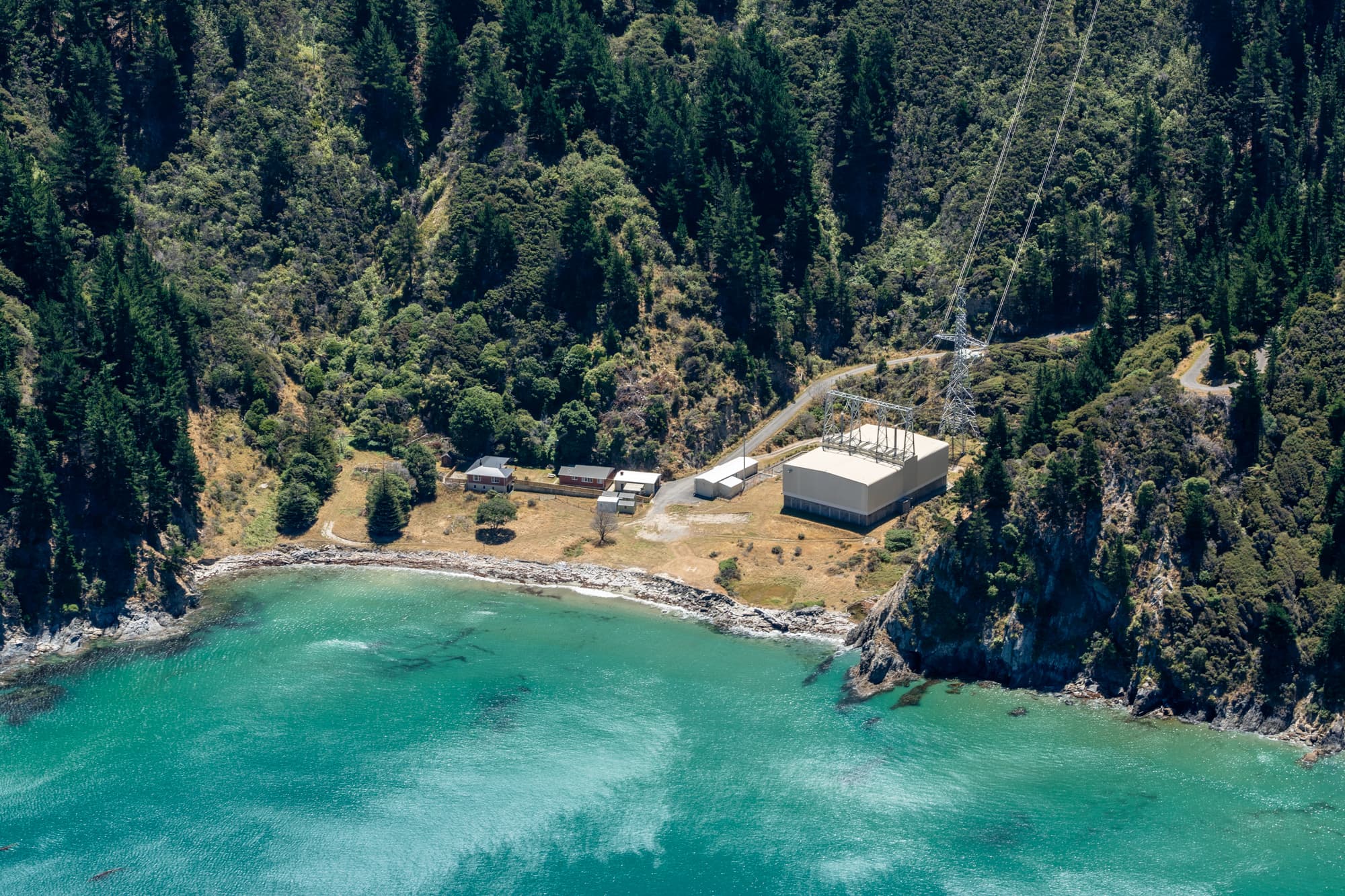
Ōraumoa/Fighting Bay in the South Island, where the HVDC overhead line connects to the undersea cables that cross Cook Strait.
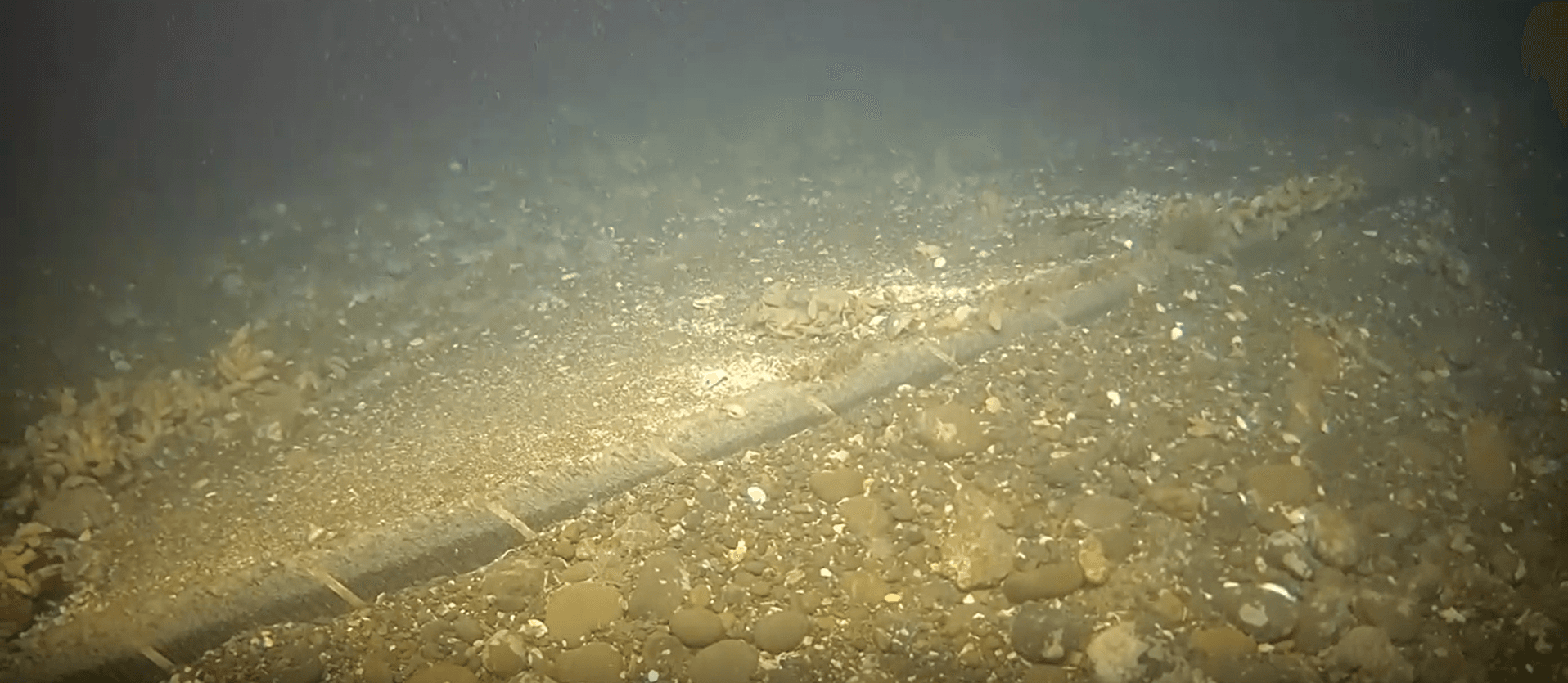
Undersea cable.
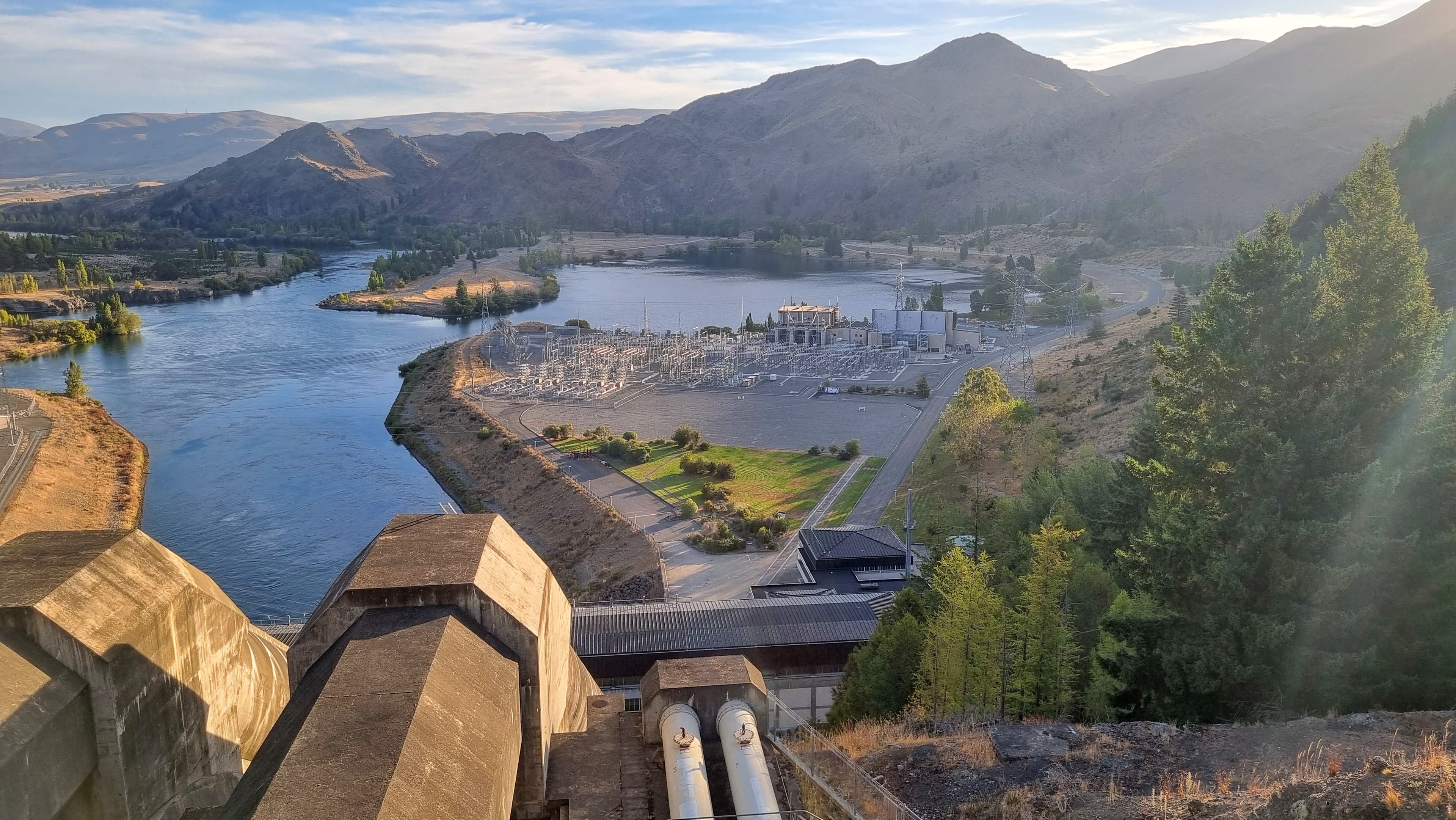
Benmore Hydro Station
As a prudent grid owner, Noble says Transpower is getting ahead of the risk curve and moving early to secure replacement cables.
“New Zealand can’t afford for it to fail,” he says.
The National Infrastructure Plan emphasises the importance of looking after and replacing existing infrastructure as it wears out. The HVDC upgrade project is a clear example of this approach in practice: long-term planning and proactive risk management to safeguard the future of a nationally critical asset.
In this instance, early planning and procurement have been crucial. Booming demand for offshore wind and interconnector projects has tied up global supplies of HVDC cable and the specialised ships required to install it, requiring firms to lock in contracts many years in advance.
“International use of these ships and resources is off the charts at the moment, with lead times of 7-8 years” Noble says.
To complicate matters further, only two global manufacturers still make the kind of HVDC cable required in New Zealand. Getting them interested in a small project halfway around the world had its challenges, Noble says, but the challenge and pedigree of the Cook Strait link has its own appeal.
“We’re a very small country in a very remote place with a very small and complex scope of work. However, we are seen as iconic,” Noble says.
In December 2024, Transpower secured a supply reservation agreement with Italian firm Prysmian. The final contract was finalised in June 2026, following Commerce Commission approval for the work, and covers the delivery and installation of 160 kilometres of HVDC cable.
In 2031, a specialised ship – costing around $350,000 a day – will leave Italy for the six-week voyage to New Zealand carrying nearly 10,000 tonnes of HVDC cable. Instead of a like-for-like replacement, Transpower is taking the opportunity to boost the capacity of the link from 1200 megawatts to 1400 megawatts. This means the Italian crew will unspool and lay four new cables parallel to the existing three.
All up, it should take three months to lay the submarine cables.
We’re a very small country in a very remote place with a very small and complex scope of work. However, we are seen as iconic.Roy Noble, Transpower
Enabling a renewable future
In some ways, Transpower is taking a calculated gamble with the project.
As a regulated entity, the grid owner has to get approval from the Commerce Commission for major capital works. Transpower lodged its application for the first stage of the HVDC upgrade in 2025, proposing a $1.138 billion investment to replace the submarine cables, build new transmission stations on either side of the Strait, and carry out other related improvements, including a new cable storage facility.
On April 1, the Commerce Commission published a draft regulatory approval for the upgrade and sought further submissions. It gave final approval in June 2026.
Notably, Transpower entered into the agreement and paid a non-recoverable deposit to Prysmian before it received regulatory approval. The need to lock in a cable installation slot drove the decision, Noble says, and the Transpower team worked hard to ensure the wider industry recognised the importance of securing the future of the cables.
“We are backing ourselves that it’s the right thing for New Zealand,” Noble says.
“We are aware of how critical the infrastructure is, and we feel we’ve got a very good case to replace it.”
Moreover, the additional capacity enabled by the fourth cable will help facilitate the transition to more renewable electricity sources.
“The more intermittent generation that you put in, the more you need to have quick responding backup,” Noble says.
“Hydro is the perfect answer.”
With more wind, solar and geothermal resources coming online, the improved HVDC link will allow the South Island hydro lakes to act more like large batteries than baseload power sources.
Transpower is preparing to lodge a second major capital proposal in 2027 for a related project: replacing the ageing control system for the HVDC. The projects will be advanced in tandem in the early 2030s, securing the future of the link for at least another 40 years.
In the meantime, Transpower is constantly on guard: it operates a 24/7 patrol in the Cable Protection Zone to warn off vessels and avert anchor strikes, and it carries out yearly patrols and inspections of the overhead and submarine HVDC cables. The job of maintaining such a critical link never stops.
Noble has been with Transpower for 27 years. Will he still be there in 2032 when the new controls and HVDC cables are commissioned?
“Only if they let me,” he jokes.
“I’d love to be. This is one of those projects that you just want to be part of: it is iconic, it is large, and it’s really important.”
Published 23 July 2025